Showing posts with label Osa's Ark. Show all posts

Thursday, 30 August 2012

Photoflying in Belgium 2012

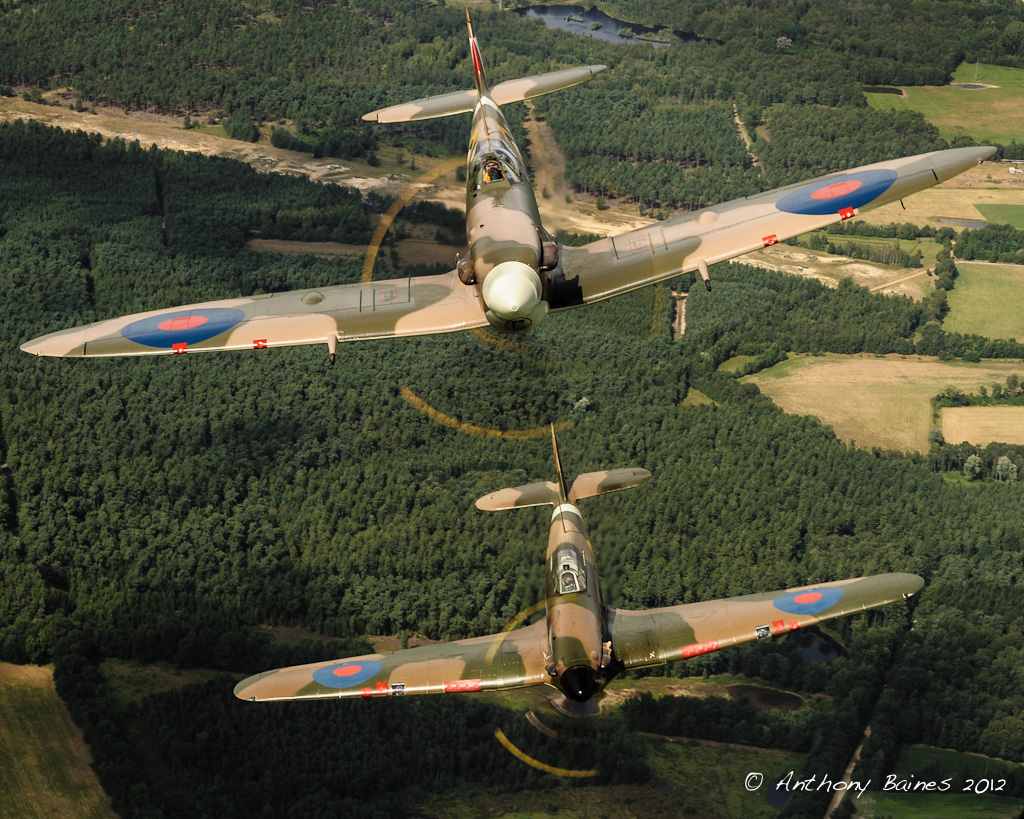
Spitfire and Hurricane, air-to-air

About 10 days ago, I returned from Belgium after this year's Photoflying days. My lack of blogging since then is not due to any lack of pictures from that time: I returned with a stupidly large amount (121 GB). I have spent such a long time sorting through the images, and trying to summon up the courage to write something sensible about a fantastic event, that I have rather been intimidated by the process of blogging.

I've edited enough pictures now to set up galleries on Flickr and Pbase.
Caught in the light: Spitfire Vb, flown by Charlie Brown
I was there for the whole of Wednesday 15 to Sunday 19 August. On Wednesday, a number of aircraft arrived including, for me, most importantly the Historic Aircraft Collection's Spitfire and Hurricane, piloted by Charlie Brown and Dave Harvey respectively. They had taken two days to fly back from Moscow via Poland where they had been attending the celebrations for the 100th anniversary of the Russian air force. We had a photo session in the evening with them and some re-enactors, which was great fun. Both pilots were in good form despite having long flights to get to Belgium.
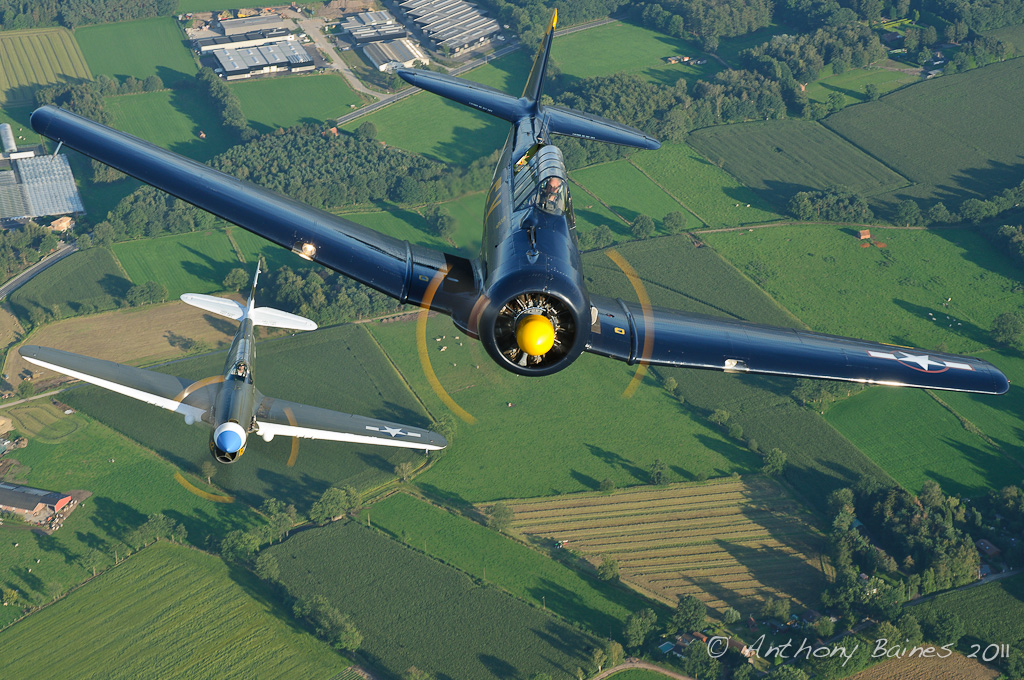
Avenger in evening light

On the Thursday morning we all gathered: about 60 photographers, nearly double the number from last year. The event is clearly getting a worldwide reputation as there were attendees not just from all over Europe but from the US, Japan and South Africa. Flight planning began and to cut a long story short, I was lucky enough to get onto two flights that day. The first one was with the Spitfire and Hurricane, photographing them from the Skyvan. The second flight that evening was again in the Skyvan, photographing a selection of warbirds and historic aircraft, that again included the Spitfire, as well as an Avenger, Jet Provost, Yak-50, T-6 and Osa's Ark, the Sikorsky S-38.
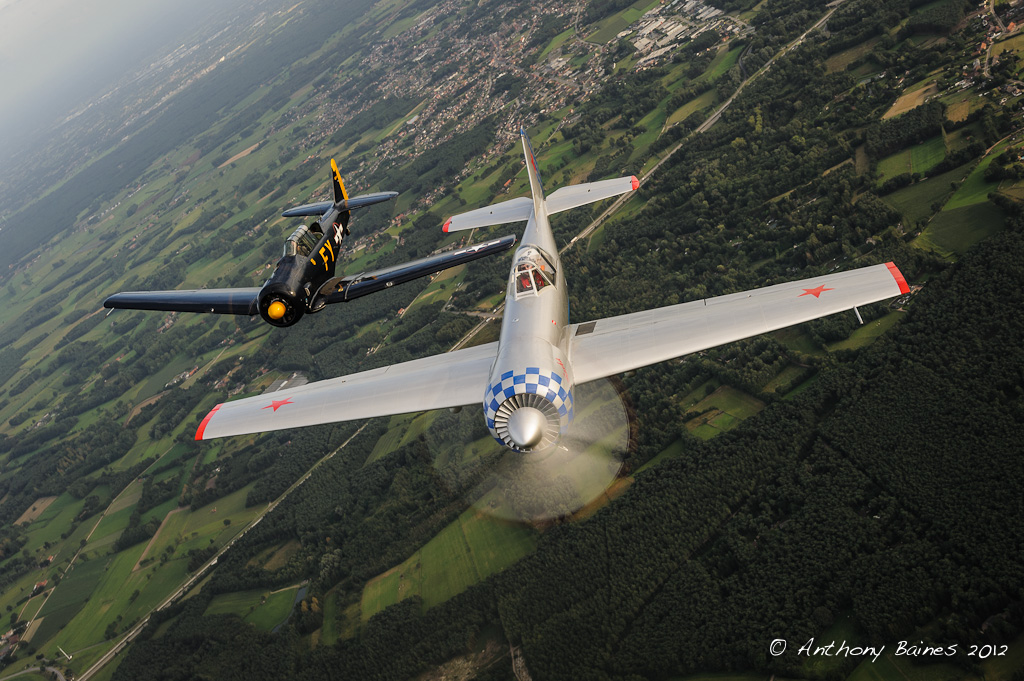
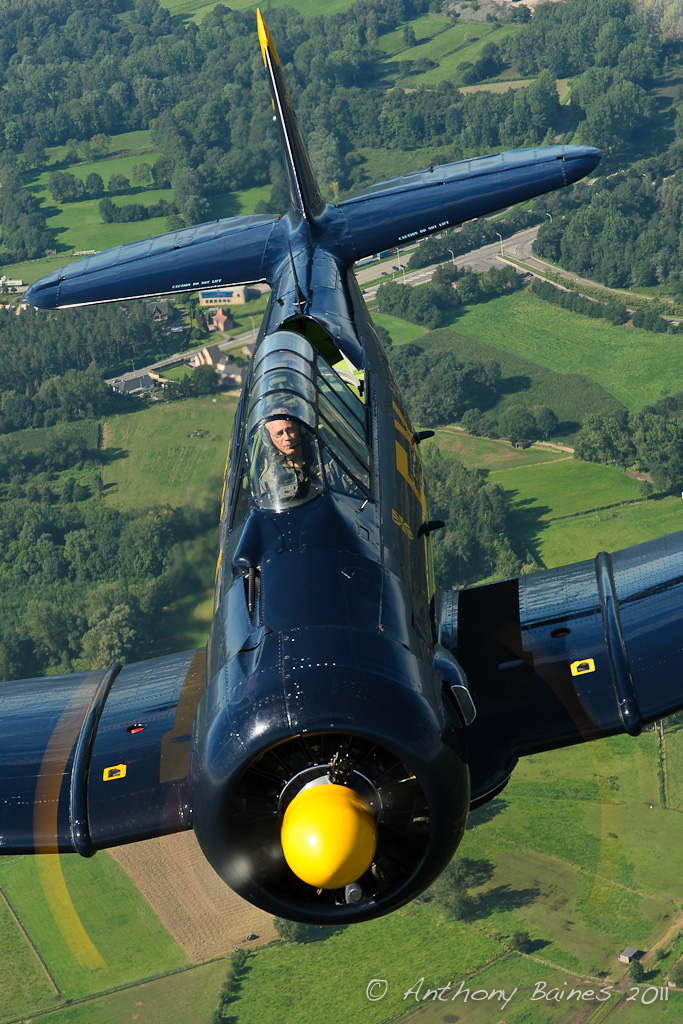
(Left) Hanno in the AT-6A (right) Yak-50 Sasha
The Friday was taken up with largely ground-based photography, and slowly wilting in the heat. It reached the high 30°s C in the afternoon. The accredited photographers had a spot marked out about halfway down the runway where we could catch takeoffs and landings. But it was a long march (I think around 2 miles) from where the cars were parked, carrying gear (two cameras and lenses, including the 200-400 mm f/4) and as much water as would fit in a bag. Lots of great aircraft came through, so, despite the long round-trip, it was well worth it. A pair of F16s did a few great passes.
That evening, I positioned myself next to the taxiway to catch start-ups and departures for the photoflying, which again yielded rather a large number of pictures. There was a night shoot organised by Daniel Rychcick as well with artificial lights on the parked aircraft: I didn’t stay long as (a) I was exhausted and (b) wanted to get back early the next morning at sunrise to catch the early light.

On the Saturday I was up early (roused by a wretched cockerel that woke me each morning with the first faint hints of dawn) and on the flight line at 5:30 AM to catch the first rays of light on the aircraft. I spent a lot of time concentrating on Spitfire because I had an idea about trying to put together an A/V -- more on that in a future blog.
Janie: Etienne Verhellen at work
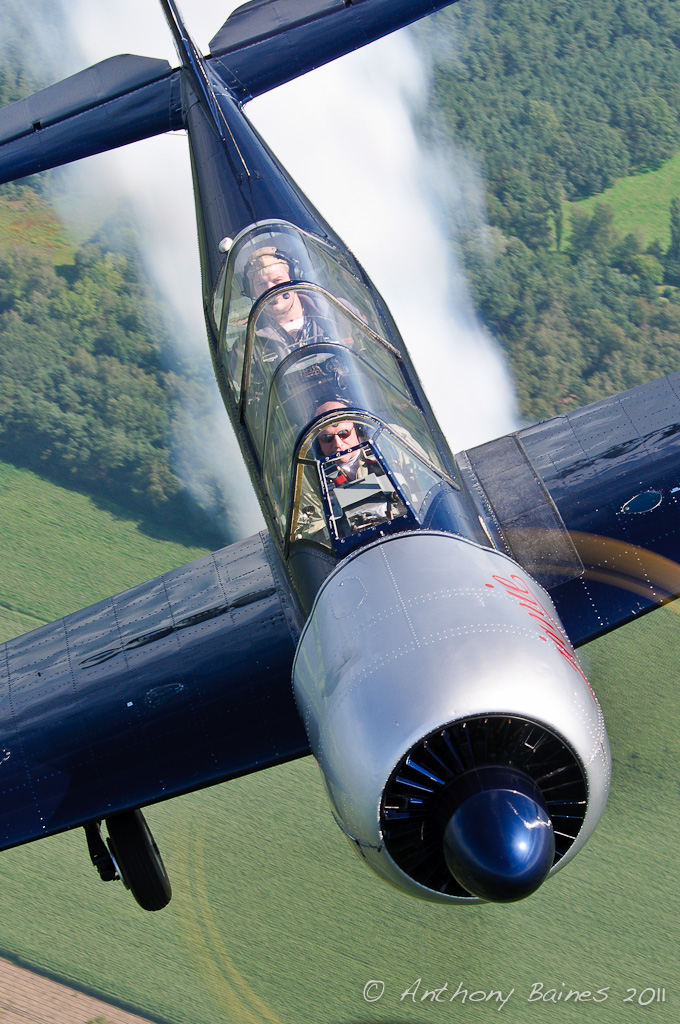
At lunchtime it was another flight in the Skyvan. This time with the classical civvies: Bulldog, Janie (the Yak-52 of Etienne Verhellen that I flew with last year), Chipmunk, Stampe SV-4c, and the AT-6A. It was wonderful to have Etienne behind the Skyvan as well: if there's someone who knows how to put on a show for those in the Skyvan it is Etienne. He left miles of smoke trails behind us as we flew, and did a very fast flick roll right up our backside that was great fun. Incidentally, I should mention that Hanno Wesdorp, who flies the T-6, was the hardest working flyer I have ever seen: he was up for all the photo flights, as well as flights intercepting arrivals for photography. Hanno is a wonderful guy, but he must really, seriously like flying to do all he did.
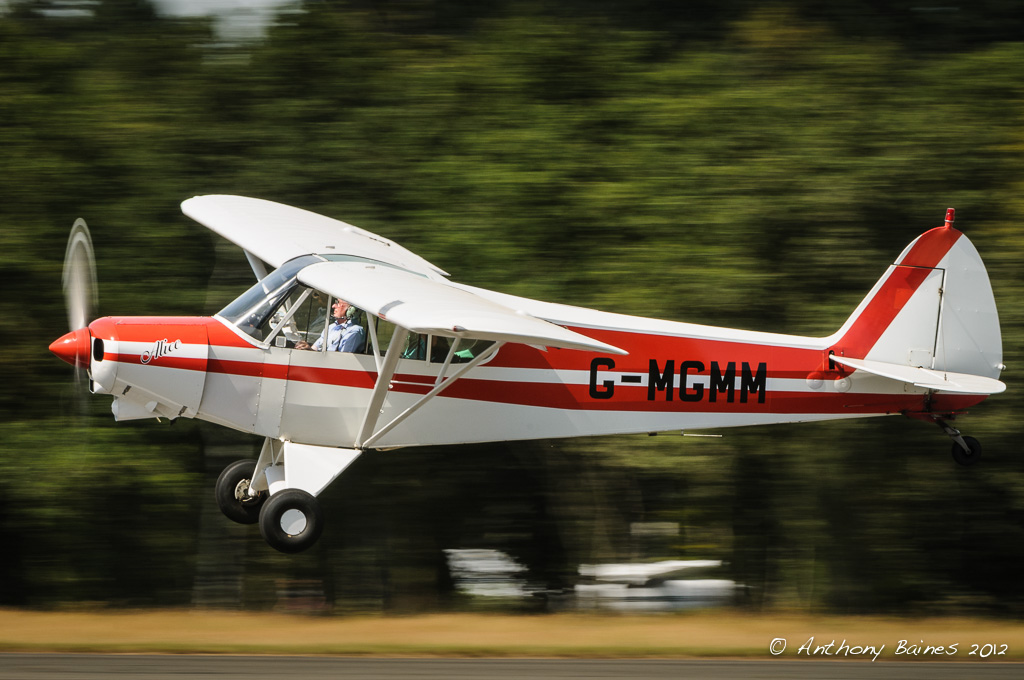
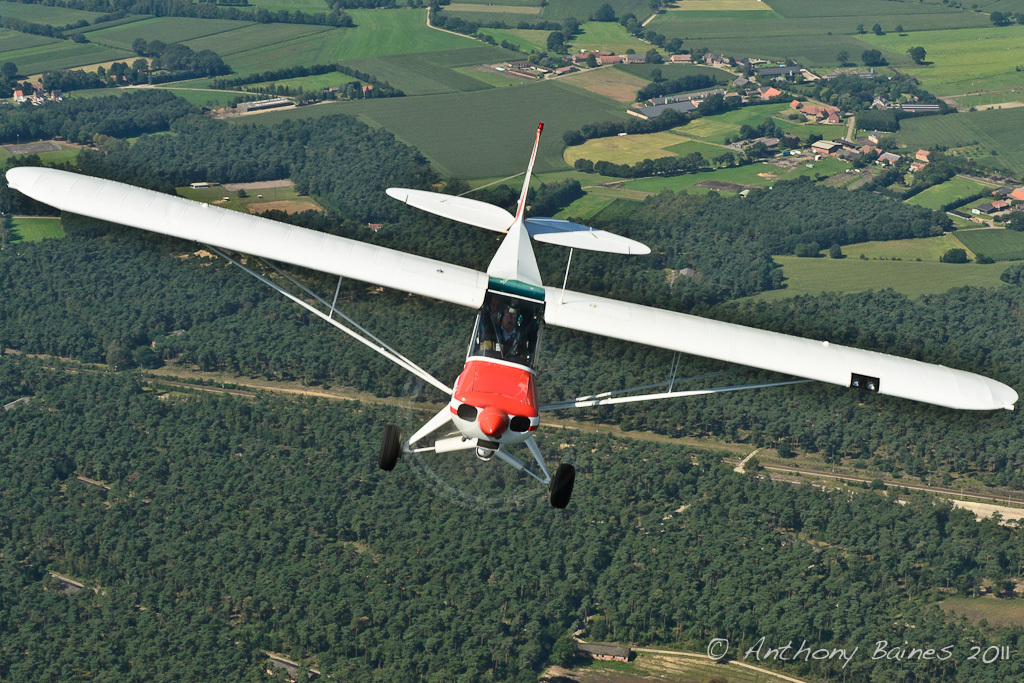
Rod Brown at the controls of Alice, Geoff Collins' Cub


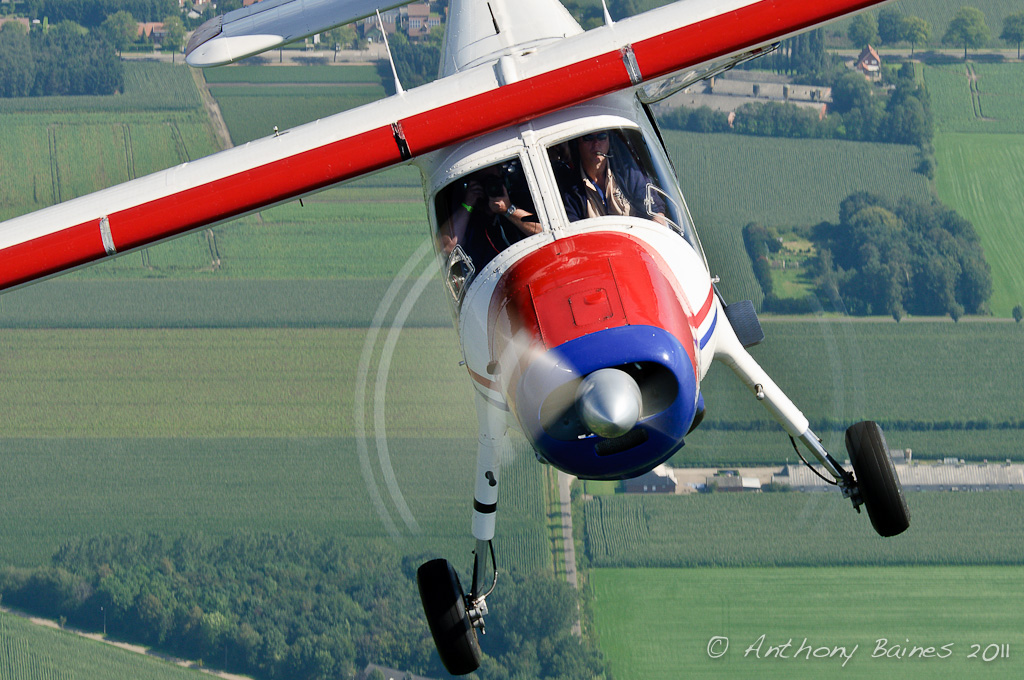
Bulldog, photographed from Alice

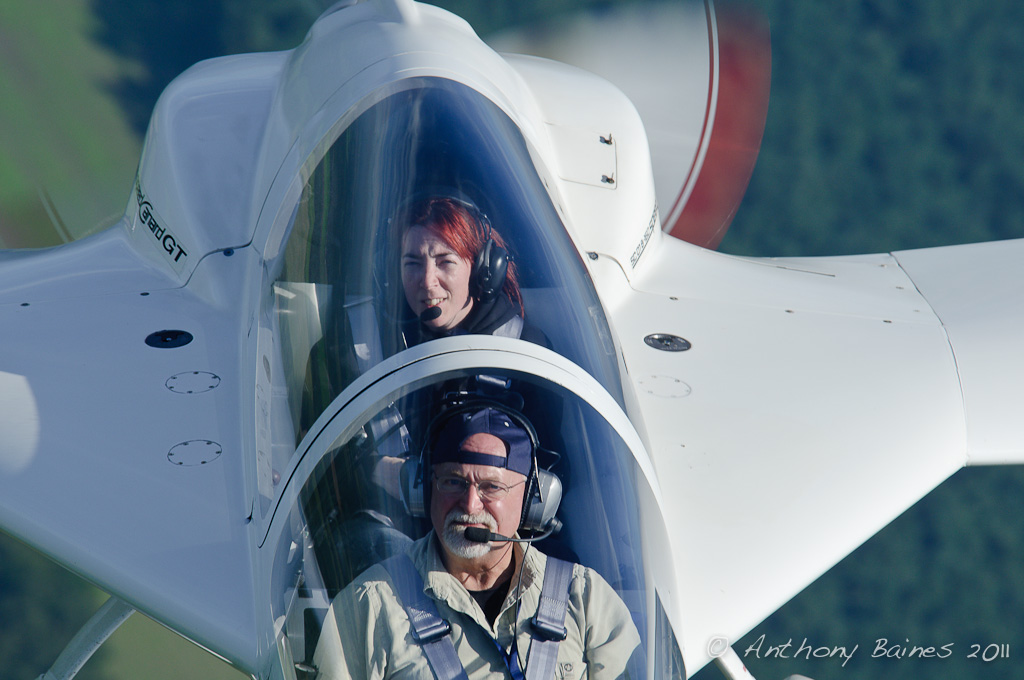
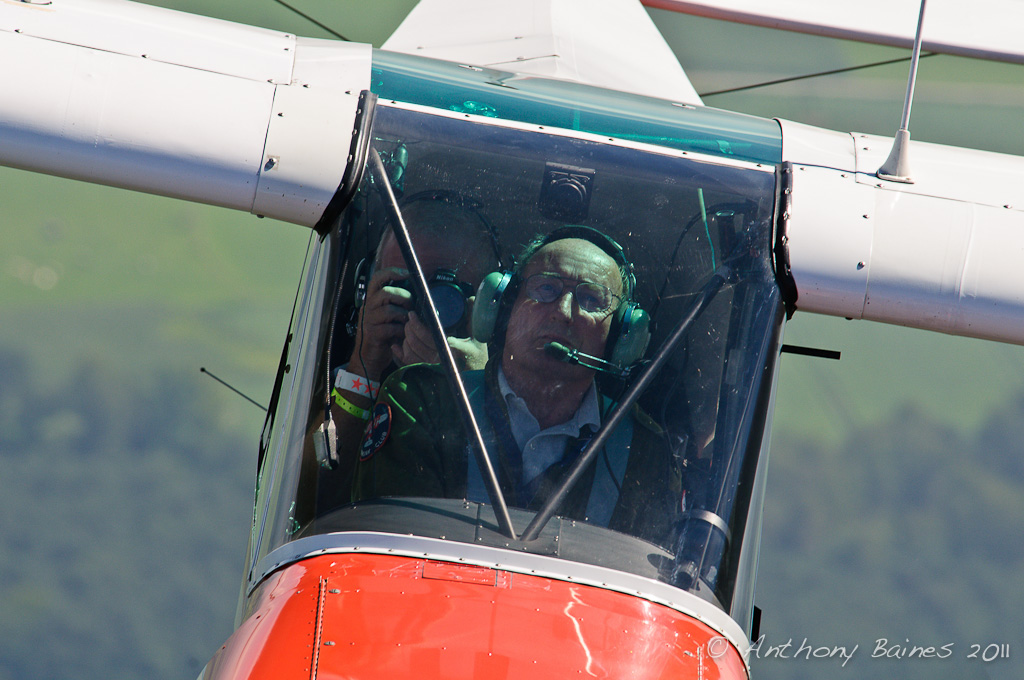
It was also a pleasure to meet Geoff Collins again who was over with his Cub "Alice". Along with several others, I had been badgering him for a flight in her, so late that afternoon I was lucky enough to go up in the back seat with Rod Brown in charge at the front. We went for a 1-1 photo flight with the Scottish Aviation Bulldog. The light was gorgeous, and Marnix Tahon in the Bulldog flew beautifully, giving me plenty of chances for shots both on the front and rear quarters. It is a bit of a challenge though: I really wanted to get the full propeller rotation which means shooting at between 1/60 or 1/80 of a second. But the two aircraft are moving in space relative to each other and the Cub is vibrating and bumping around, so the rate of success is small. However, as McNally says, no pixels die in this, so there's no need to skimp on the number of shots. I got more than enough in the end to satisfy me.
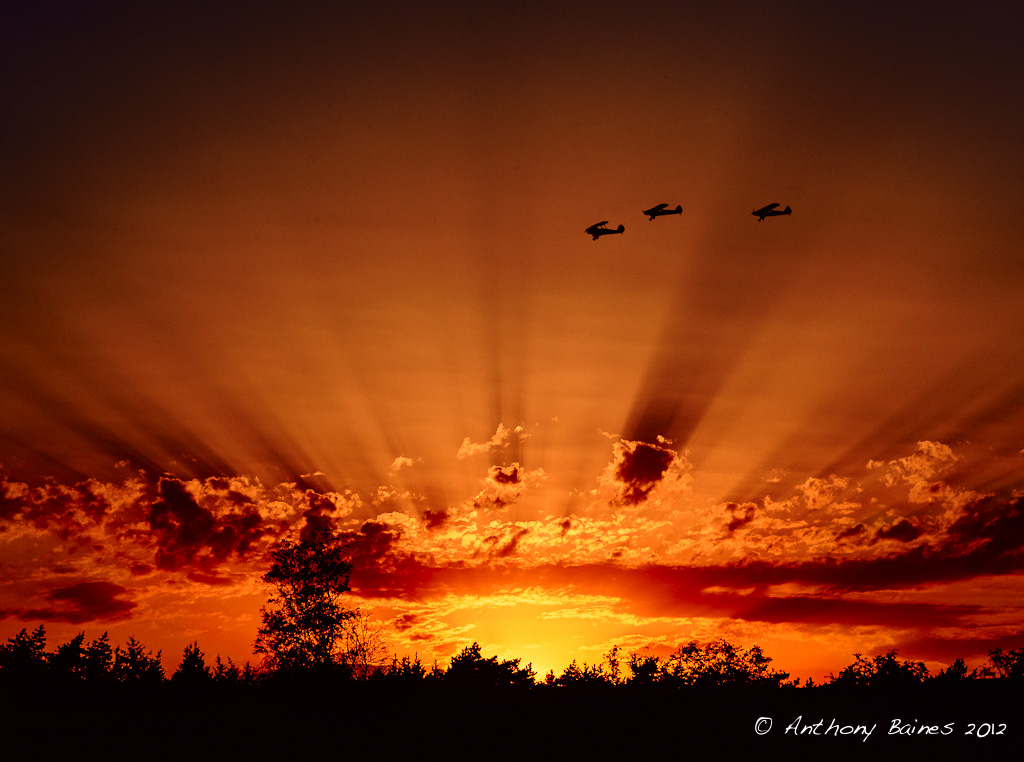
Sunset with vintage formation

Emerging from the Cub, the sunset was coming up, and it was starting to look beautiful. There was a vintage formation of small aircraft circling the field with a photoship in attendance. Rod Brown went up with another photographer to try catch the vintage formation. I stood with Geoff and watched as the Cub gamely gave chase. Meanwhile the sunset was getting better and better and Geoff and I said to each other "Wouldn't it be wonderful if that vintage formation went through the sunset?" And after a few minutes they did. The picture that resulted is one of my favourite sunsets recently.

Malle-Zoersel airfield in evening light. Skyvan (top), Breitling DC-3 and Osa's Ark are in evidence. Air-to-ground shot from Alice.

After all that, it was back for the farewell barbecue which was great, except that it was so hot that I had little appetite. The afternoon had got up to 40°C in the end, and we were all just about dissolving in our own sweat. Zoersel Malle airfield (EBZR) is also placed on a sandy plain so it was a bit like walking through a desert at some points. I was glad to get back to the hotel, shower and get to bed.

The Sunday morning was largely a case of hanging around taking a few pictures but with little specific in mind. Eventually, I left with plenty of time to drive back to the ferry at Dunkirk and I was home by 9 PM.

All in all, an utterly brilliant experience. It was exhausting given the possibilities of shooting from dawn to midnight, and enervating in the heat; not only that, but photoflying is the most expensive passion I can imagine coming across. Nevertheless, photoflying has been one of the great experiences of my life. Flying with the Hurricane and Spitfire has ticked an item off my bucket list.

My thanks go to Eric, Tom, Giel, Peter, Michael, Jesse and the rest of the Aviation Photocrew and their organisation. It was great to meet a large number of people I had seen last year, including Daniel Rychcick, Mark Salter, Andy Martin, Frank Grealish and Sonya Cooley, and Kedar Karmarkar who no doubt will write an excellent and much more comprehensive blog piece than me. Among the pilots it was a privilege to make the acquaintance of Charlie Brown and Dave Harvey, and to meet Etienne Verhellen and Jean-Michel Legrande again. I certainly hope to go back in the future.


Sunday, 11 September 2011

Photo flying in Belgium: Part 5. Osa’s Ark.


Sikorsky S-38 touching down on the canal near Viersel, Belgium


Parts of this series
Photo flying in Belgium: Part 5. Osa’s Ark

Part 5. Osa’s Ark
This will be a less wordy piece than my previous blog entries from Belgium. The subject of this piece has been so well documented elsewhere, it scarcely needs more from me. I've also posted more pictures in a gallery on Pbase.

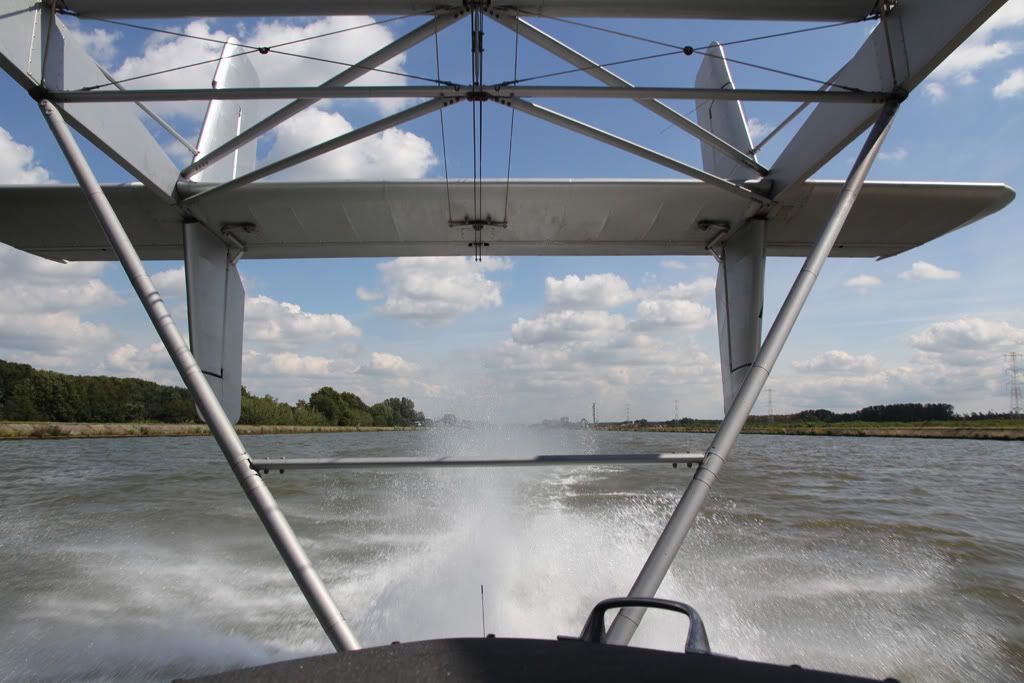
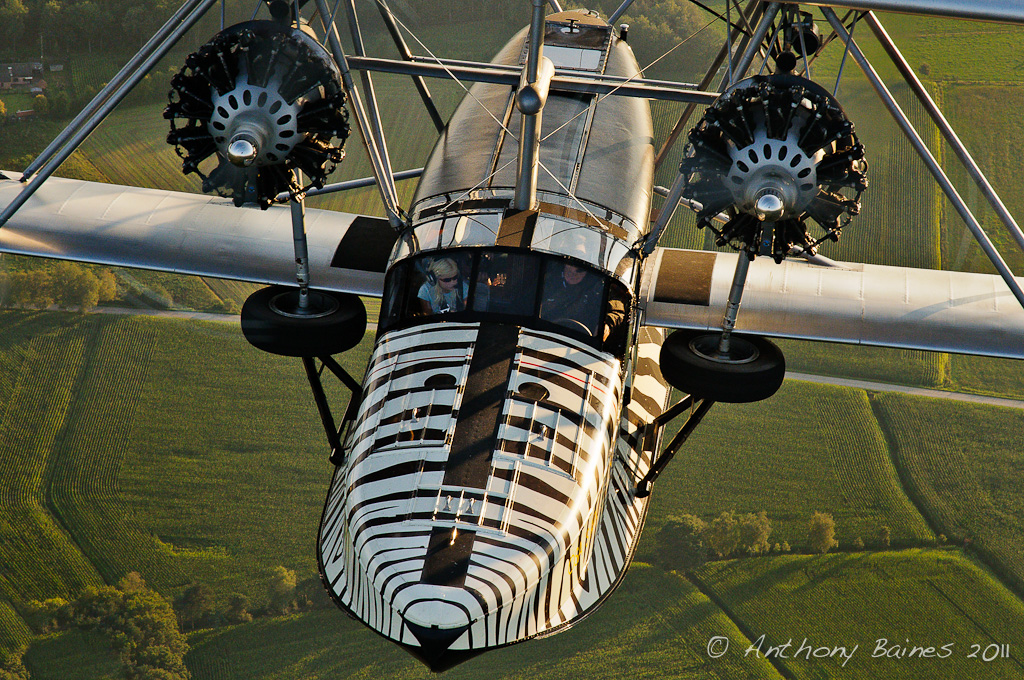
During the photo flying days we were tremendously fortunate to have the sole flying example of Sikorsky's earliest flying boat, the S-38, present and flying all the time. Her owner Tom Shrade had brought her over from America and she was touring Europe. The original intent have been to fly down through Africa, but the political situation there ruled out that possibility.

Osa's Ark at Zoersel

Tom flew her several times a day, not just for air-to-air their photography, but additionally for experience flights for passengers, and also for a TV program, where he was filmed from a helicopter touching down on a nearby canal.


I was able to photograph her, static, ground-to-air and air-to-air. It was great pleasure to be able to chat at length with Tom and his partner.

Air-to-air with the Ark
During the photoflying days at Zoersel, there was a regular need for aircraft to be pushed from one place to another. There was no shortage of volunteers for this – but Osa’s Ark attracted more volunteer pushers than any other, a testimony to her popularity.  

Up close and personal


~~~~~~~~~~~~~~~~~~~~~~~~~~~~~
Finally: here are some other accounts and pictures from the photoflying days.

Kedar Karmarkar's Blog (not just the Ark, but an amazingly detailed account of the whole experience - highly recommended).
Mark Salter's own thread on UKAR: his pictures look remarkably like my own! (He was standing behind me.)

If anybody reading this has their own account that I've missed, please leave a comment with the link, and I'll add it to this list.

Sunday, 28 August 2011

Photoflying in Belgium: Part 3. The Academy and Warbird flights


This is the third post in my series on Photoflying in Belgium. Note that further pictures are available on Pbase.

Parts of this series

Scat VII


Briefing
On the Saturday, it was a 9 AM briefing for the Academy photo flight. Pilots and photographers got together to see the list of aircraft that would be participating, their order and timing; for the pilots, formation speeds, call signs, radio frequency and navigation points were assigned. Then photographers made the half-mile walk to the Skyvan. We were harnessed up, cameras gaffer taped, FOD hazard checks completed, and finally it was into the aircraft.

For takeoff, it is important to balance the weight across the centre of gravity, so half the photographers stayed at the rear, while those in positions 6-11 moved forward on to seats that pulled out from the side of the aircraft. Positions 1-3 have the "interesting" experience of taking off in their final photography positions right next to the open door of the Skyvan, so they see the runway speeding up beneath them and receding as the plane lifts off. Positions 4-5 get to sit on the garden chairs during takeoff, but move into their photography positions once airborne. Positions 6-8 (i.e. including me) sit on the forward pulldown seats for takeoff, but scramble over and into the garden seats to assume their photography positions.

The Academy flight
For me, once the engines of the Skyvan were running, everything seemed to happen extremely quickly. We were off and taxiing, and then all of a sudden the engines ran right up and we were off. I expected us to get to height (about 2000 feet) before any other aircraft came close to us. I did not expect what happened next.

No sooner had we left the ground than the T6 was following us: I’d not seen it taxiing out. "S***. It's the T6! F***. Quick get into position! F***!!!" While the aircraft was still climbing, and while the runway was still receding below us, we scrambled into position. I had the same adrenaline feeling that I get standing at the top of a steep ski slope as I moved down the sloping cabin floor to clamber over and into my seat. The churning prop of the T6 was clearly in view during all this, but I was too busy to worry about that.
T6
And so, something I have waited for over several months was right in front of my eyes. The T6 was flying close enough to us that I could hear the roar of its engine above the turboprop noise of the Skyvan and the buffeting wind. That moment was simply magical -- it's one of those things as a photographer you never really expect to see until it happens.

I started shooting pictures. I had the D300 in CH mode with a 16 GB card in it with the 80-400 lens attached. I also had my daughter's D3100 with the 18-70, again with a 16 GB card. Problem was that I soon realised that I kept shooting the D300 in CH I would use the entire card up on the T6 alone. I quickly made the decision to switch to S, and try just to selectively shoot when the aircraft was that a good angle. Starting at 1/320 I made my safety pictures first. Dropping to about 1/160, I got pictures that I knew would show a bit more prop blur. I tried going to a slower shutter speed still, but chickened out of going really low for fear that the vibrations in the aircraft would blow the pictures. It is difficult to tell by chimping on the rear screen whether or not pictures are really sharp, so even though 1/80 looked okay in the Skyvan, I didn't feel like going to slower shutter speeds. Every so often I swapped between the 18-70 mm and 80-400 lenses, but after a while found I was using the 18-70 much, much more.

After the T6 a number of other aircraft came along in turn -- Super Canard, Commander, Dornier 27, Bulldog, Piper Cub.

Left to right: Super Canard, T6, Commander


Yak-52 "Janie" G-CBSS
Dornier
Bulldog

 Some of the other participants in the Academy had got rides in the subject aircraft. I got a nice series of shots of Sonya in the back of the Canard.

Sonya in the Canard
Most of the subject aircraft carried a passenger, usually another photographer, who could also serve as a second set of eyes for the pilot. Geoff Collins, who flew as a passenger in his own Cub “Alice” has posted a lovely set of pictures from the flight, including one of photographing the photographers photographing him. He commented to me that he could tell when the aircraft was in a good position, because all the lenses appeared to twinkle as the shutters went. 
Piper Cub "Alice"
Photographing the photographer ...
I made a point of not shooting all the time. Guy Westgate said to me some time ago that he wondered whether photographers like me ever put our cameras down, and just enjoyed watching the flying for its own sake. In that spirit, as we turned in the figures of 8, once in a while I just put the camera down, watched the aircraft and enjoyed the snarl of the subject's engine over the noise of the Skyvan's own.

Something I should have anticipated, but didn't, is that flying the Skyvan in formation with, say, a Piper Cub means that the Skyvan is having to fly at a high angle of attack to avoid stalling at the slow speed needed for the Cub to formate. The stall warning beeper sounded quite frequently, and the high angle of attack meant if felt like I was continuously about to fall off my garden chair.

It seemed no time at all, but an hour and a half had passed in a flash and before I knew it, we were heading back to the ground. I had expected to get out of the plane feeling completely drained. But apart from being a bit cramped up from being unable to move, and with eyes a bit tingly from the fumes from the Skyvan's engines as we taxied in, I was fine. In fact, I was desperate to get back up again!

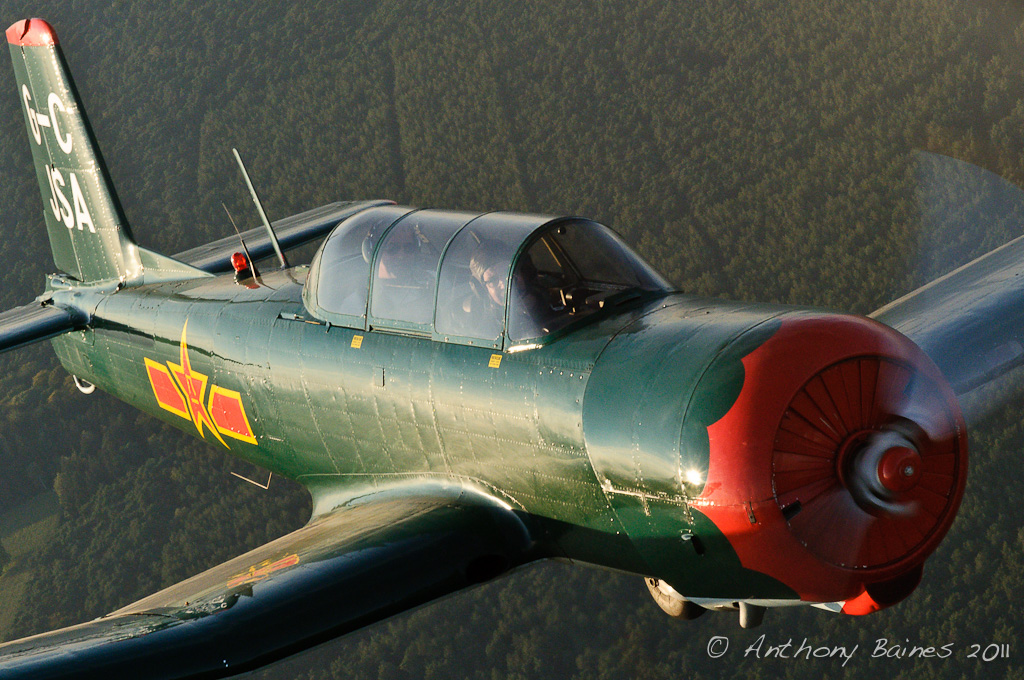
Returning to the Aeroclub hangar for lunch, I met Jean-Michel Legrande who asked if I would be interested in flying in the back of Etienne Verhellen's Yak 52 so that his Yak-18 and the Nanchang could be photographed in formation. They'd never flown together before and he wanted some pictures. Well -- I can resist everything except temptation, and there was nothing more tempting on earth! More on that in a future blog piece, but I've put one of the pictures (with very Wonky Horizon) as the opening picture of this series.

The Warbid Flight
In the evening, with the sun going down and the light getting more and more golden, it was back into the Skyvan for the warbird flight. During the afternoon, I came to the conclusion that I'd do the warbird flight with just the D300 and the 18-70. That lens got the most use in the morning, and I'm comfiest with the D300. Having looked through the pictures, I'm very happy with that decision.

The problem with vintage propeller planes is that they are complex pieces of mechanical engineering, and they can go "tech" at a moment’s notice. So you never know until the plane is behind you what you are really going to get. I had high hopes of a Mustang, but you could never tell in advance. As we taxied out, again with me in the number 8 position, all of a sudden there she was. Scat VII was taxiing behind us, and as we stopped to wait for take-off clearance, she stopped behind us.

Waiting to fly: Scat VII behind the Skyvan
Again as we climbed to altitude, it was a case of getting into position as quickly as possible. Having done it once, I was a bit less panicked than before, and got into my garden chair pretty quickly. Along with the Mustang, up came the P40.

Evening patrol: TF51D Scat VI and P40N "Little Jeanne"

P40N "Little Jeanne"
From then on it was straightforward magic. Again, I made a point of putting down the camera from time to time to simply savour the moment, and the sound of a Merlin or Cyclone

Skyraider
Smudgers at work on the T6
 The T6, Yak-18 and Nanchang came up to follow the Skyraider.

T6 texan and P40N Little Jeanne

Yak-18

Nanchang NAMC-CJ-6A

Finally, the last aircraft of the day -- up came the Sikorsky S38 Osa's Ark. The sheer rarity of that experience alone, flying with the Ark, made the fee for the flight cheap at the price.

Osa's Ark Amphibious Sikorsky Aircraft
As before, before I knew it we were back on the ground. It had been just the most wonderful experience. For me, it was the perfect example of "close" to, and "in front of more interesting stuff".

Talking of interesting stuff, I’ll put up a couple more pieces in this series next week on Flying with the Yaks and a Nanchang, and on Osa’s Ark. More to come ....