Thursday, 29 March 2012

And speaking of exhibitions...


Following on from Phil’s last post, this year, I've decided on a little side project. It is also something of an experiment in second guessing other people’s tastes.

It is to try to get a body of work together that is accepted into the national/international open photographic exhibitions. Around the UK and internationally, there are a number of exhibitions which anyone can enter their photographs into and which are judged competitively. So as a starter on this project, I've entered some pictures into two exhibitions this March: Vale of Evesham and Basingstoke. Each of the two exhibitions is highly competitive, with an acceptance rate of about 20%.

The inspiration for trying to get pictures accepted comes from the fact that I was awarded my CPAGB last year. The next step would be to apply for the DPAGB (Distinction of the Photographic Alliance of Great Britain). The DPAGB guidance notes  state that the passing standard is equivalent to "open exhibition standard photography". In other words, the pictures are judged against a standard such that it would be "likely to do well in Open Exhibitions, achieving a high rate of acceptance" *. Not only that, but where the CPAGB requires 10 pictures, the DPAGB requires 15. So, to be in with a chance of a DPAGB award, I need to build up a substantial body of work that appeals to the tastes of the selectors of open exhibitions.

Here comes the problem. I had never tested my work against the open exhibition standard. So, I had no idea whether any of my pictures would meet the judges’ taste. Hence, my side project to get pictures accepted in exhibitions.

Having submitted my pictures online, I've been impatiently awaiting the results of the selection. To my surprise and delight I've had three images accepted in each exhibition. I put six forward for one, and eight forward for the other, so a strike rate of 6/14: this is about double what one might expect based on a 1/5 acceptance rate, and seems pretty good to me for a first go. Or to put it another way, I'm dead chuffed.

Of course, there is some confusion when it comes to trying to interpret this in relation to where I might stand with the PAGB judges. I put in to both of the exhibitions "The Entertainer": this was one of the highest scoring images in my CPAGB assessment. However, it has been rejected from both. Interestingly, it scored the lowest of all the pictures I put into one of the exhibitions and significantly lower than some of the ones that did not score as well in the CPAGB adjudication. Oh well. I had been hoping it would go forward for my DPAGB -- I think I can forget that! However, a couple of pictures have been accepted by both places, so that looks reasonable. I just need to test them some more by entering them into further exhibitions to see what the true rate of acceptance actually is.

I am currently finding the process of entering images to exhibitions and discovering if they're accepted quite enjoyable. When the acceptances stop coming, no doubt my opinion will be modified. However, I'm going to carry on doing this for at least the immediate future, to try to build up a body of 15-20 images that get predictable acceptances.

Incidentally, I've come across the website of the Digital Artists and Photography Associates Group. They are a Midlands-based group dedicated to helping each other get their work accepted in national and international exhibitions. Seems like an excellent idea to me. They have a Flickr pool too, which I must look at some more. We need something like that down here in the South as well.


*What is a high rate of acceptance anyway? Sounds like it has exactly the same length as a piece of string.

Saturday, 24 March 2012

The return of the D300

Margate, across the beach to Turner Contemporary. 8 image stitch.
 As I have blogged previously, my Nikon D300 developed a fault towards the end of last year where the mirror locks up. Around Christmas time, it became unusable and I decided to buy a Nikon D700 to replace it. Since then, the D300 has sat neglected, only occasionally coming out for one or two single shot pictures. But it gnawed at me. It is such a good camera, and has been such a good friend to me for 115,000 exposures that I could not just let it sit.

I had had a rough estimate from Fixation last year for replacement of the sequencer unit that stops the lens down after the mirror flips up: it was that that seemed to have gone. They also recommended replacing the shutter since it got to the point where they see failures, and replacing it at the same time as the sequencer would save on labour costs and the price of a set of rubber seals (these need to be replaced every time the camera is opened).

So last week, I bit the bullet and sent into Fixation. It returned only two days later - a fast turnaround I appreciate greatly. With an almost tangible sense of relief, I opened the box that it came back in to find that it was in fine working order.

Now that I have both cameras working, I can't help comparing the two. The D700 is definitely my go-to camera for whenever I would want to work on a tripod, or if I want to use full frame lenses (like my 105 mm f2 AF-D DC) to get the look they are intended for, or if I want to shoot at essentially unlimited high ISO.

At first sight, they do not look that much different, but I can feel the difference in weight and bulk when simply walking around with them. There's something about the size and weight of the D700 that is just too bulky and heavy for comfortable carrying over extended periods.

There is also something about the controls on the D300 that I find easier: moving a focus spot around is much quicker and more instinctive for me on D300 than the D700. Not too surprising, I suppose: after 115,000 exposures, you would think I would be used to the way the D300 is set up.

Last Sunday, I went with the family to visit the new Turner Contemporary Gallery in Margate (which Martin and Phil have blogged about previously) to see the Turner exhibition: the D300 came with me, with just the 18-70mm lens.

We decided to go by train for a change, not least because it's no quicker to drive (an hour or so in the car), and from where we live it was only £5.50 per person on the train for a saver ticket. Walking from the station, I could not resist shooting a panorama, shown above, across the harbour to the gallery.

The gallery was busy but not heaving, so I was able to enjoy the exhibition greatly. Rodin's Kiss was on exhibit on the ground floor too: a major centre of attention.

Grabbing a Kiss
So now I feel like I really have the best of both worlds with the two cameras, one crop frame and one full frame. Definitely very happy with the feeling of an old friend returning.

Congratulations to Phil

Phil (centre) and some of the other award winners at the opening of the KCPA exhibition.

Just to follow up on Phil's last post. Many congratulations, Phil, on the award of both a Ribbon and a Highly Commended in the KCPA Print Exhibition.

Phil is too modest to have pointed this out in his post, but "A moment of meditation" was awarded a prestigious PAGB Ribbon and "Phantom" a Highly Commended.

Kent County Photographic Association 13th Annual Print Exhibition 2012


Last night Anthony and I went to the revamped Maidstone Museum in the Bentliff Art Gallery. The 13th Annual Print Exhibition represents the best prints of the association of all the photographic clubs in Kent. To have an acceptance is always pleasing: this year I was lucky enough to have four prints accepted and an additional two received awards.

Sunday, 11 March 2012

Headcorn Aerodrome in March

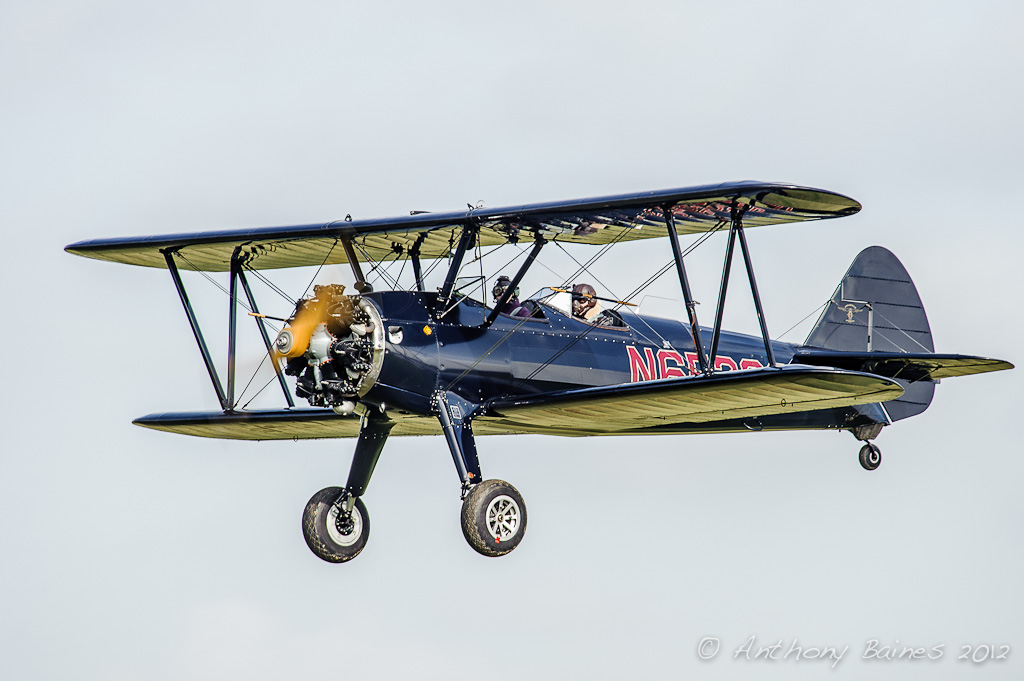
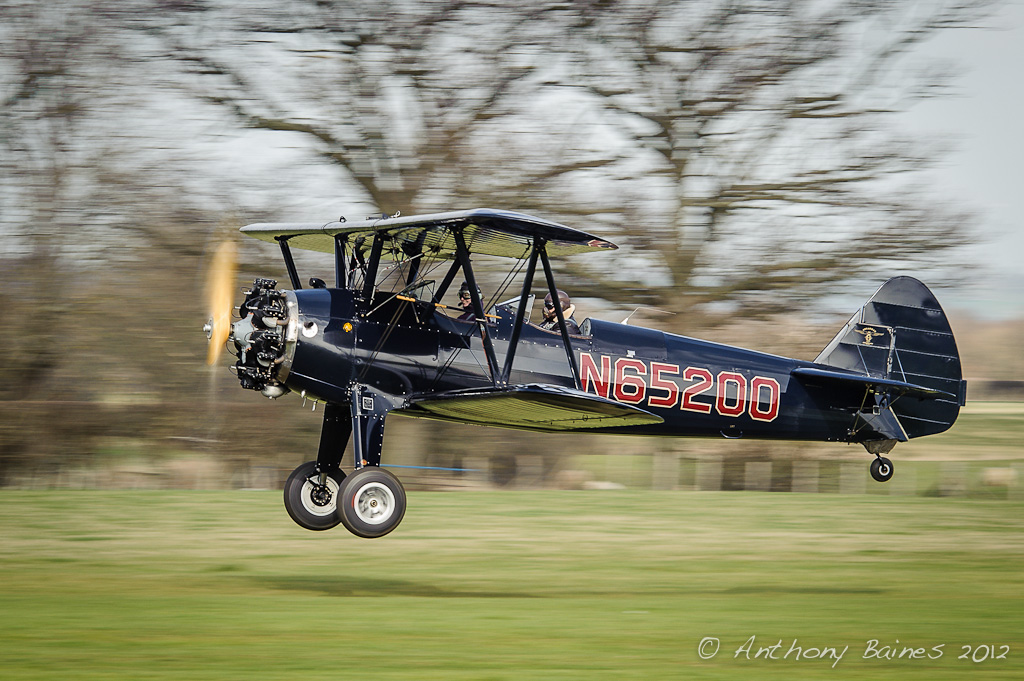
Boeing A-75N1 Stearman, N65200
To Headcorn Aerodrome for the first time in a couple of years, hoping to see a number of visitors from France - aircraft that I don't normally get to see. It was the 100th anniversary of Harriet Quimby flying across the Channel - the first woman to do so. To celebrate this, bidirectional flights between Kent and France had been organised. However, poor visibility in the Channel put paid to much of this. Nevertheless, the airfield was busy all day, and a number of French visitors did arrive.

I met Graham from APS there which was great; he introduced me to Colper as well. A very pleasantly sociable time, in weather that improved through the day.

First time out photographing aircraft with my new (used) D700 as well, so good practice. I was trying to get some slow speed panning with the D700 and the Nikon 80-400mm VR lens. I was trying out speeds down to 1/50th-1/60th sec at focal lengths up to 400mm. This gives nice blurring of the background and (depending on the a/c) the possibility of full prop rotation. Naturally, there is a low success rate, but I was routinely getting usable images at 1/60th sec.

I'm getting a bit of a complex about that lens. Every time I read anything about it on the forums, it comes across as a PoS, to the point where I feel like to total moron for even owning it, let alone keeping it for 7 years. But if it is used within its limitations, it works just fine, and produces nice sharp pictures. I didn't miss anything yesterday that could not be attributed to lack of skill of the operator. I wouldn't use it to try to track a Typhoon on a fast pass, or a swift in flight, but if you can accept it for what it is - an older design without a built in motor - and most importantly use it on a camera body with a strongish motor (e.g. the D300 or D700) it is OK. Not as good as the more expensive 70-200 or 200-400, but as a lens you can walk around with all day and not be crippled (unlike the 200-400) it is a very good compromise. (Having said all that is is by no means a modern lens, and needs updating badly. At any airshow there are tens, if not hundreds of thousands, of pounds worth of Canon 100-400 lenses pointing skywards, and scarcely one Nikon 80-400. That's a noticeable market Nikon is ignoring).

I've put most of the pictures on Pbase, but just as a flavour here's a couple.

A beautiful Stearman was visiting (and see opening picture): not one that I recognise, and the star of the day as far as I'm concerned.
Boeing A-75N1 Stearman, N65200


This lovely Stampe flew as well.
Stampe SV4B, G-BRXP
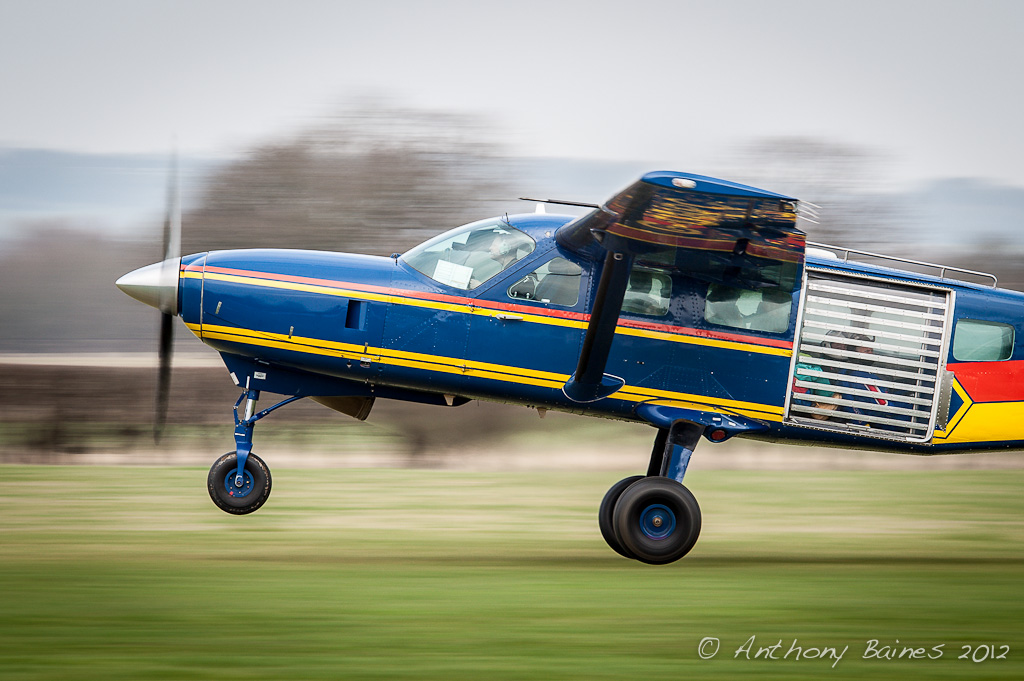
As usual at Headcorn, the parachutists were up and about. A moment's panic at one point, when we saw a parachute that had not opened properly tumbling to Earth. It turned out it was from a tandem pair of parachutists, who had had to jettison the primary chute, and go on to their reserve. All well though.
Self-unloading freight: parachutists on their way to a jump

The landed, and the yet to land

Tuesday, 6 March 2012

My top ten photo tips

I've just written a 'top 10' article for my business blog and though I would share it with you.

Wednesday, 29 February 2012

February images.

I have been very neglectful of Wonky Horizons of late, the main reason being hard drive problems. This I am happy to say has now been repaired  thanks to Martin and Simon at Galileo Solutions. So, I thought  it was about time I put up some recent images.


 This was actually taken last year as I have not edited this years images


 This was taken at a session with Leonie at the begining of December.


One from last summer.
This is another from the session with Leonie. 

Sunday, 12 February 2012

Winter and its compensations


Iceberg plant in fresh snow and a week later 

This week has been unusually cold for the normally mild – but damp – South-East of England. Martin’s post from last Sunday showed the snow we’ve had beautifully. I wasn’t as energetic as Julia and him, but confined myself to clearing the drive and a few snaps around the garden.

We’ve not had any snow since then, until this morning. The weather forecast towards the end of last week promised us warm air for this weekend, but it has stayed at or below freezing, and we woke up to more snow this morning.

During the week, we had some particularly cold days. Driving past Chilham one day on the way in to work, the thermometer read -9°C. A colleague who lives out there confirmed this, saying she was willing the thermometer to get into negative double figures, but it never quite made it. Chilham by name, chill ’em by nature.

Anyhow, there are some compensations at this time of the year. Chief among these is that my wonderful wife has taken to the kitchen to preserve fruit in various forms.


Home-made marmalade (left) in the pan and (right) in the jar 
Best of all, it is Seville orange time, which means home-made marmalade. I don’t know why – when recipes are so well established, and the ingredients are essentially the same – but I’ve never come across a commercial marmalade that comes to close to the deliciousness of home-made. As a point here, I think you can walk into any WI market and pick up some jars of home-made marmalade which will knock the socks off any commercial brand.

Rhubarb 
Forced rhubarb is in too. Again, this comes early in the year, and is a great pleasure. My wife’s mother used to preserve fruit by bottling it in syrup, so this year Gina has made some time to preserve the new rhubarb, and also some pears, by bottling.

Mussels
Mussels are at their peak in the winter months, so yesterday we bought some from our local fish lady. They made a wonderful moules marinières last night, going down well with a nice Sauvignon Blanc.

March is only just over a couple of weeks away – spring flowers, and with luck a bit of sun to come as well.

Sunday, 5 February 2012

A winter's day in Great Chart

Plan 'B'
The original plan for the Wonky group was for a trip to the coast today, however, after seeing the forecast on the Friday night we opted postpone until the weather was less inclement (OK, yes, we wimped out).

On awakening on Sunday and drawing back the curtains I was amazed to see there had been so much snow. I made a big bowl of porridge and topped it with raisins soaked in rum (there's no finer way to start a Winter's day), washed down with a strong black coffee.

My wife and I decided on a stroll around the village and I packed my camera and a couple of zooms into a rucksack and we headed off around 10am.

The images below are not prize-winners but help to communicate the drama of the snow and the community spirit in the village. [All images are taken within 1Km of the village centre with 24-105 and 70-200 lenses].

Great Chart village
Just opposite us is a public footpath that heads up the village through the Millennium Wood and then on to the church.

We weren't the only ones out enjoying the morning
With not a breath of wind, snow was stacked on even the smallest branches
A few berries from one of the few holly branches that was not harvested by the locals at Christmas
The Millennium Wood
From the top of the hill looking back over Ashford. One can just make out the shape of the Charter Building top left.
The White House had a white roof too!
Drifting snow had decorated the stone work
The Old School doorway
The village's Millennium sign
The village of Great Chart is mentioned in the Doomsday Book, which is referenced on the village sign.

No prizes for guessing when the churchyard gate was built
The church is difficult to photograph up close but this vantage point from just down the hill was the best I could find

The best pub in the village
The Hoodener's Horse is of special significance as it is also where we hold the Wonky Horizons committee meetings. As one can imagine, we don't have very taxing agendas!

The snow reached half way up The Street
Toward Godington Park
At the bottom of the village we headed off down the footpath that skirts the cricket pitch and leads to Godington Park.

The view to the west
Next stop, Pluckley. Note the plume of snow being whipped up by the train
We then crossed the (partly frozen) Stour
Julia getting impatient with me as I take more photos! [Stop moaning and stand still just there dear....]
Godington Park
Over the last few years a fresh set of trees has been planted in the park. The protective surrounds help to give some definition to the bleak landscape. [By now the breeze was picking up and the long-distance shots were getting a bit hazy though]

Families out with their sleds
Could not resist a bit of 'Topaz' on this one
Freedom to roam. The park is a great space for dog walking
At the way marker we turned round and headed back to the village  -well, the Hoodie would be open in ten minutes!
A bit more Topaz. 
The fences and trees really stand out against the snow, rather than blending in with all the other mid-tones on a normal day.

One of those 'if I won The Lottery' houses . . .
We were not the only ones heading for the Hoodie.
Having fun in the snow and standing still (momentarily) for me to take a portrait
. . . and again - so cute!
The village cricket ground
I think I might write to the England Cricket Board and suggest that they try and play the next test against Pakistan here - bet their spinners couldn't turn it on this pitch!

Two minutes to midday - just enough time for a couple of snaps
Now that's what I call a pub!
Steve and Holly (that pint looks good . . .)
After all that snow and almost monochrome landscape it was a real contrast to get inside the pub where the colours appeared extremely vibrant.

I had a chat with Steve in the pub and we shared details (and half a gallon of Tribute)

My favourite beer of all time and my evening choice. Bit too strong for lunchtime.
One of Cornwall's finest and the perfect lunchtime/session beer
Time to go home
Contents of our woodshed
The last two winters have been really cold so we decided to stock up on logs for this one. By the middle of January we were wondering whether we had wasted our effort and money.

I'm glad to say we hadn't!

Love that glow