Wednesday, 14 August 2013

You don't always need a super-telephoto to shoot aircraft

Airbus Military A400M and the Red Arrows
Airbus Military A400M and the Red Arrows. UK Airshow Review Picture of the Week 2013, July, Week 30. 24mm on D700
I think I'm noticing a pattern, and it is telling me something.

I often put some of my aviation pictures up on the forums of UK Airshow Review (UKAR). The UKAR forums attract huge numbers of pictures every week – thousands during airshow season – and feature some of the best photographers in the business, both pros and those who photograph just for the love of it.

Each week UKAR editors choose a small selection of pictures to be their "Pictures of the Week" (POTW). Because there are so many pictures submitted to UKAR each week, having a picture chosen for a POTW is quite an honour. I have just had my sixth in the last 12 months (I've put a set of them on Flickr as well). And a pattern is emerging.

Something I have always enjoyed doing is to try to put some context on anything that I photograph. So in addition to the classical tightly cropped aircraft-filling-the-frame pictures, I always like to put the aircraft in context or maybe show the crowd at an event. Most often, this involves not the use of a super-telephoto to get close to the action, but rather a normal or wide angle lens. Of the six POTWs that I have had over the last 12 months, only one has been taken at 400 mm, and one at 200mm. The others have been taken at wide-angle (24 mm on full frame) or "normal-ish" focal length (50mm).

All aviation photographers use telephoto lenses one way or another to make images of flying aircraft – not least myself. But providing a bit of variation on the theme,  showing context and trying to tell a story, really does add to the interest and distinctiveness of the pictures.

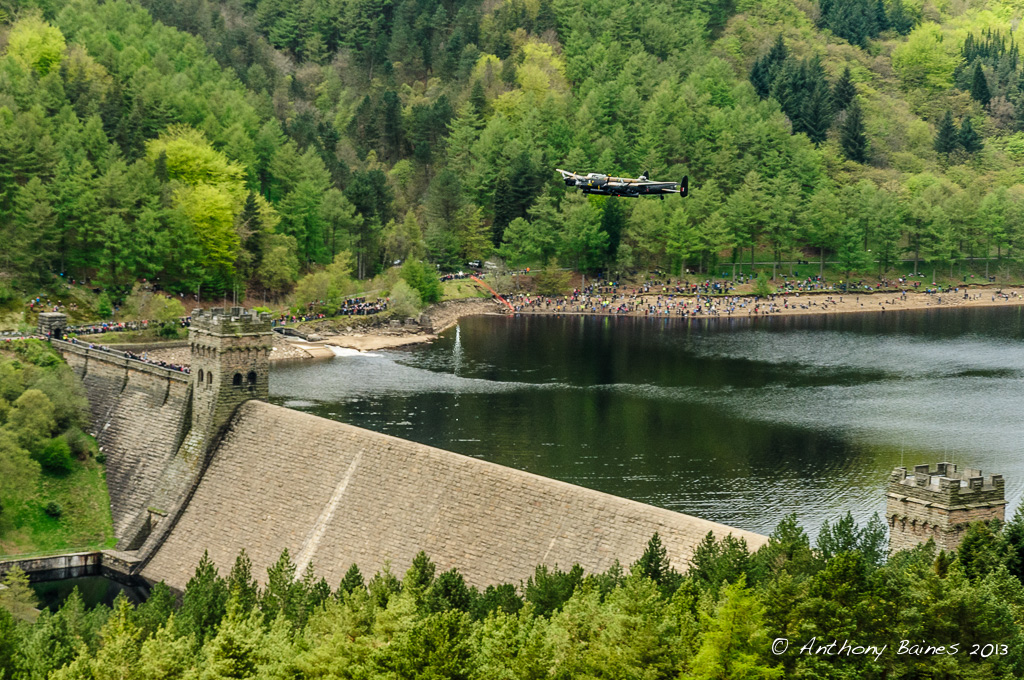
BBMF Lancaster over Derwent Dam. 50mm on D300.
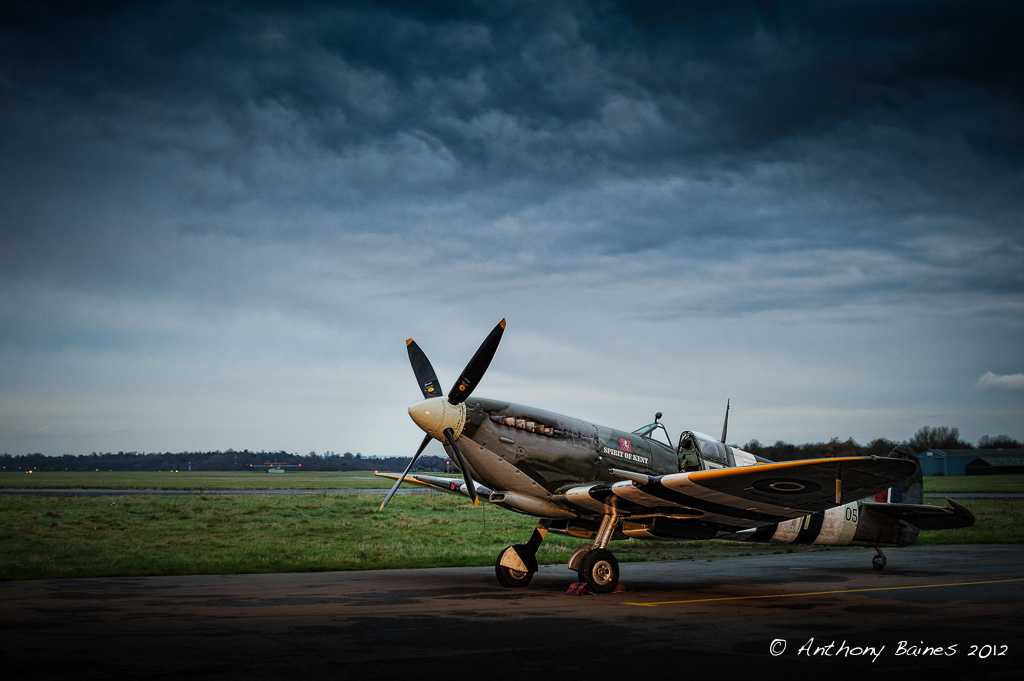
Supermarine Spitfire TA805 Mk9 (the Kent Spitfire). 50mm on D700.
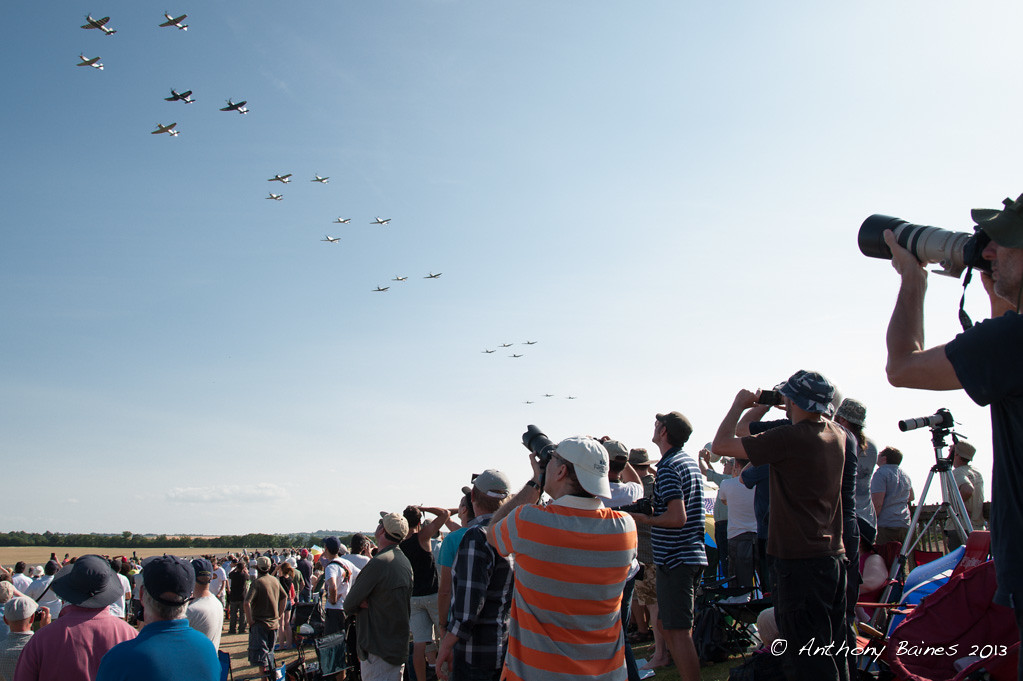
Balbo Finale at Duxford Flying Legends, 2013. 24mm on D700.
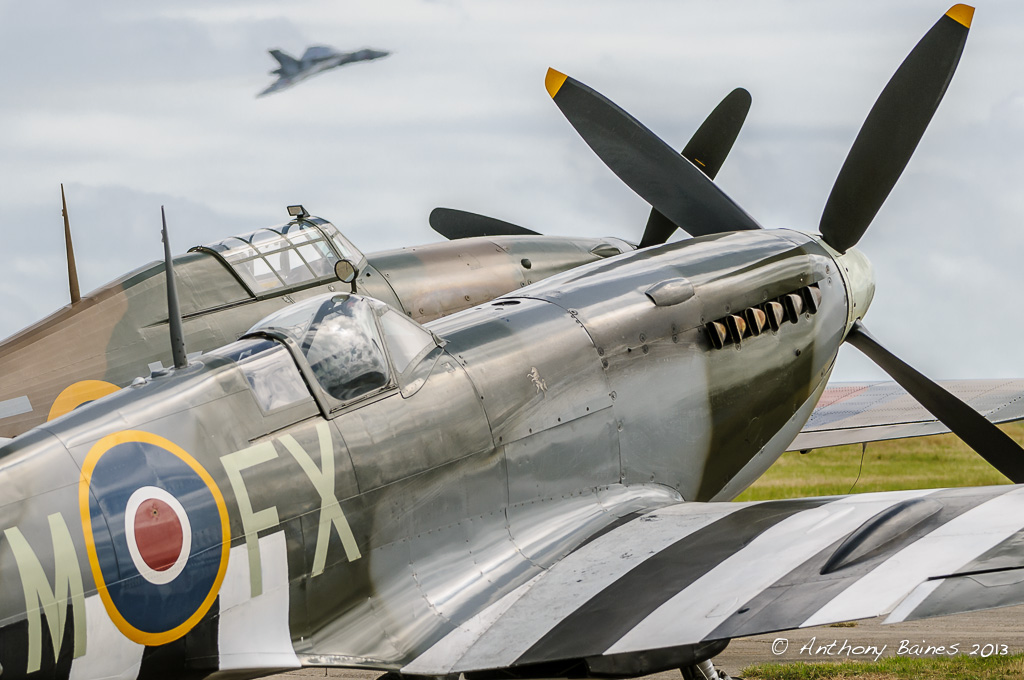
Spitfire, Hurricane and Vulcan at Manston. 200mm on D300.
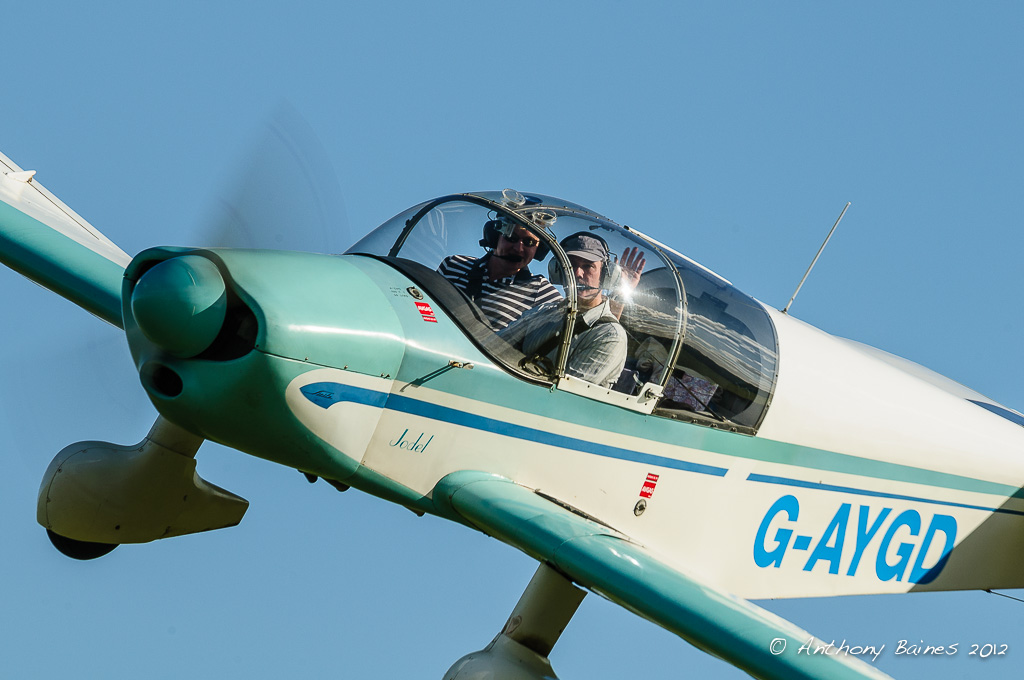
Bye-Bye! Jodel Dr1051 Ambassadeur at Stowe Maries, Essex, Sept 2013. 400mm on D300.
And, naturally, it does help to lighten the load when you can put down a lens the size of an anti-aircraft gun, and pick up something smaller and lighter.

Saturday, 10 August 2013

Phil's ARPS

It was just over a month ago that I took a few days off to go west and attend the Royal Photographic Society assessment day  at their headquarters in Bath. I arrived the day before to hand in my panel of fifteen prints,  spending the rest of the afternoon in the beautiful city taking the odd photograph. That evening I stayed with Martin's friends Peter and Sue, who provided a wonderful meal and good conversation.

Next day I set off for the assessment which began at 10.30 am. Each panel is presented with a statement of intent,  a short explanation of the photographer's objectives when putting the panel together. In my panel I relate to the influence of Victorian postcards being anonymous, grainy and faded with sometimes mysterious subjects, at the same time demonstrating a personal vision and style.

After two hours seeing about fifteen panels, of which only six or seven passed, it was my turn. You watch as your images are placed on the display stand. The panel of five judges then get up and make a close inspection and discuss among themselves the merits or otherwise of each image. The chairman then selects two of the judges to pass comments on  the images. I was relieved when both made complementary remarks; one or two other judges added their comments. Then they are asked to vote, holding small cards up so only the chairman can see. If it fails he will not announce the name, but with a pass he then asks if you are present, and then congratulates you.

Happily I was successful  and  was later told it was a unanimous decision. A few days later I received my certificate to confirm I am now an Associate of The Royal Photographic Society.


Thursday, 8 August 2013

A user's review: a year with the Nikon AF-S 24-120mm f/4G ED VR lens

Manhattan from Roosevelt Island. Panorama of 24 overlapping images at 75 mm stitched with PTGui. Larger original
This blog piece is adapted from a forum post I put on DPReview a few weeks ago. Since it is in the nature of forum posts to disappear without trace, it seems worth revising and reposting it on Wonky Horizons.

This piece is a short user's review of the Nikkor 24-140 f/4 G VR lens now that I've had it for just over a year. I've used it mainly with my Nikon D700, and to a lesser extent with my D300.

Bottom line: it is a terrific lens and I'm delighted with it.

I bought this because I wanted a general purpose zoom for the D700: this camera has an FX (full frame, or 35mm equivalent) sensor. For my purposes the focal length range, constant f/4 aperture and VR (vibration reduction otherwise known as image stabilization) were just right. But before buying the lens, I hummed and hawed about the lukewarm to outright negative comments I saw online about it, as well as the price, which was more than I really wanted to pay.

The thing to appreciate is that this is a 5x zoom, and you pay in both money and ultimate image quality for practicality. It can never be expected to match the optical quality of a top-of-the-line 3x zoom (e.g. 24-70mm f/2.8), but it is (relatively!) smaller, lighter and cheaper.  In the end, I gave in and bought one in May last year (from Wex here in the UK, who were cheapest at the time).

I've used it mostly as my go-to lens for day-to-day work. It has been with me walking round cities, for landscape and aviation photography. I've done a fair amount of people photography as well.

I'm posting a few samples below with comments.

The focal length range is great for photographing events. Here's a couple from each end of the range taken when the Olympic Torch came through Canterbury last summer.

The Olympic Torch passes though Canterbury. 24 mm.


Crowds who came to see the Olympic Torch. 120 mm.


It works well with grad or ND filters. The next one is with a Lee ND grad and the one after that has both a ND and a Big Stopper.

Supermarine Spitfire TA805 Mk9 (the Kent Spitfire)


Seasalter beach


VR works great. Here are a couple taken air-to-air with slowish shutter speeds to get full prop circles. The thing about these is that they were taken in aircraft that vibrate significantly, and the VR just helps with sharpness.
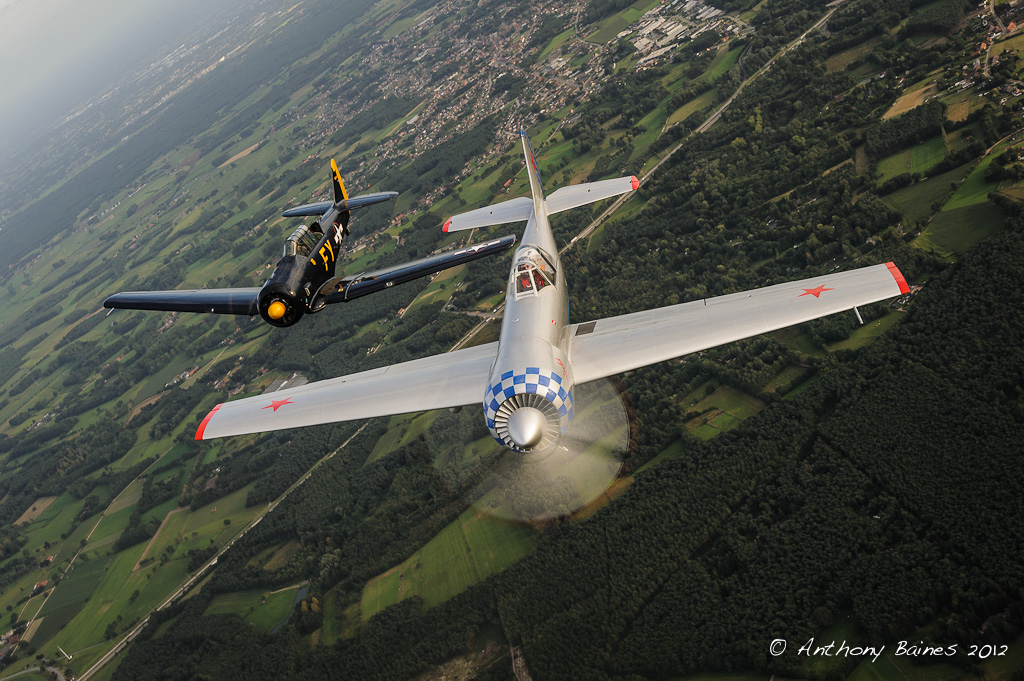
Yak-50 "Sasha" And T6


Bulldog G-CBJJ


Some of the criticisms I read focussed on the overall sharpness and general image quality. I've no criticisms here at all. I don't print larger than 18" x 12" usually, and all those I've made at that size are simply pin sharp irrespective of aperture or focal length. (The Spitfire picture above looks great at 18" x 12"!) Similarly a print of the next one is bitingly sharp and detailed.

Fat Tuesday's instruments


I've used it much less on the crop-sensor D300, both because of size and weight (see below), but also because I don't find the focal length range so comfortable on crop-sensor (DX) cameras (your mileage will certainly vary on this point). It works very well on the D300, but needed significant fine focus adjustment (-10), which was not needed on the D700.


Just for my own interest, when I thought of writing this review, I thought I would try a few pictures to compare the nature of the images at f/4 (wide open) with two of my favourite primes at the same aperture: the venerable 105 mm f/2 DC AF-D and 50 mm f/1.4 G AF-S. I took them into my garden, and used a tree trunk as my "model". Using a tripod and exposure delay/remote release, I took some pictures as simple comparators for sharpness just off centre (about where you might put your subject's eyes in a portrait), and quality of the out of focus background.
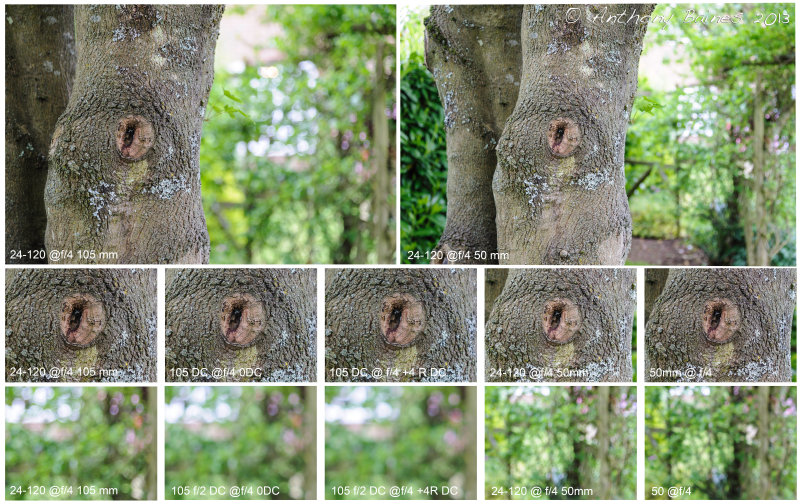
Comparison of the 24-120 with 105DC and 50mm primes: best to look at the original via link below

Original, larger version here

I was pleased just how good the zoom is: certainly sharp enough for my purposes. Both the primes are sharper at f/4 than the zoom, as expected. But, note that the zoom is sharper than the 105DC when +4R DC is applied: perhaps that's another reason why the 105DC is a flattering portrait lens? The bokeh of the 105DC is, as I'd hoped, much better, especially with the +4DC, but I'd have no qualms at all about using the zoom for an outdoor portrait if I'd not got either of the primes with me.

Just a couple of other points. Vignetting, distortion and colour fringing? I never even notice them becuase I have the Lightroom lens profile set to apply automatically to my Raw images. The lens does vignette and there is colour fringing (see examples in Mansurov's review), but Lightroom's corrections are so good, they're not an issue.

Sealing? I've not got this lens very wet in the rain, but no problems so far (fingers crossed). In terms of dust access, I've recently come back from Fairford, having spent 5 days in dry, dusty fields and by active runways. Dust everywhere: I didn't change lenses on either the D700 (which had this lens on, or the D300, which had the 200-400 on) for that reason. But at the end of that time, there was no more dust on the D700 sensor than there was at the beginning of the week (and the same applies to the D300). I'm very, very happy about that.

What don't I like about it? Size and price. The price now, here in the UK, is even more expensive than when I bought it, and you'll want to think long and hard about whether the Nikon 24-85mm f3.5-4.5 AF-S G VR Lens (or a third party lens) would suit you equally well at lower cost.

After a year with this lens, I would not change my mind. I'll take the constant f/4 and wider focal length range, even with the greater cost.

But size. This is a big lens. I've always been one for small cameras, and having "grown up" in photographic terms with an OM2n, I'm still amazed (and slightly horrified!) that I've ended up with something as big and heavy as the D700/24-120 combination.


On the way to Earls Court for the Olympic Volleyball
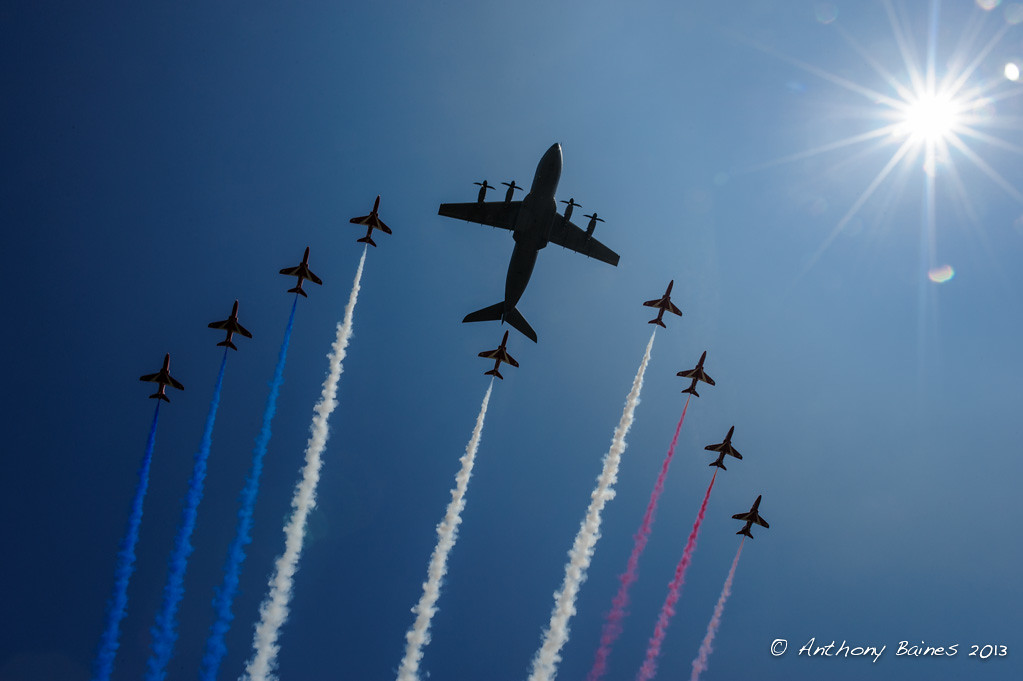
Flare is well controlled: note the sun in the image above, top right (see also my picture of the Red Arrows/A400M flyover: Flickr or in the previous post).
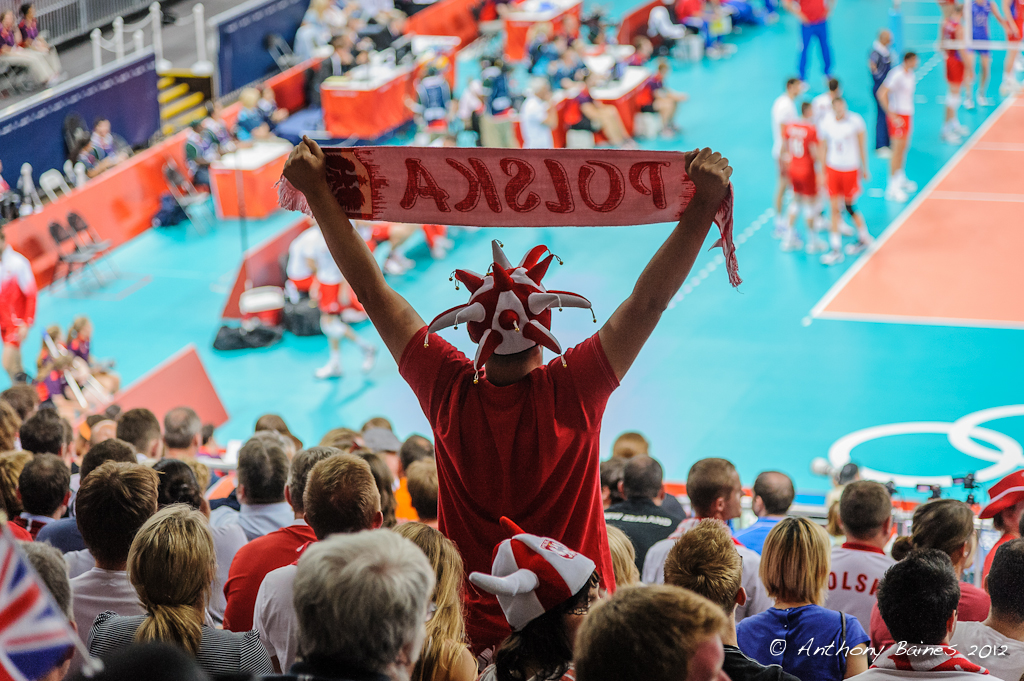
Poland fans at the Olympic volleyball

I spent some time during the Olympics walking round London with the D700/24-120 (and the 50mm in the bag as well) and I took it on a visit to the US at the end of last year. Although in technical terms it is perfect for me as a walk-around combination, in the end it is just too heavy and big to enjoy carrying for a whole day walking in a city. I've gone back to the D300 and 18-70mm zoom for the moment as my day-out-in-a-city stand by.
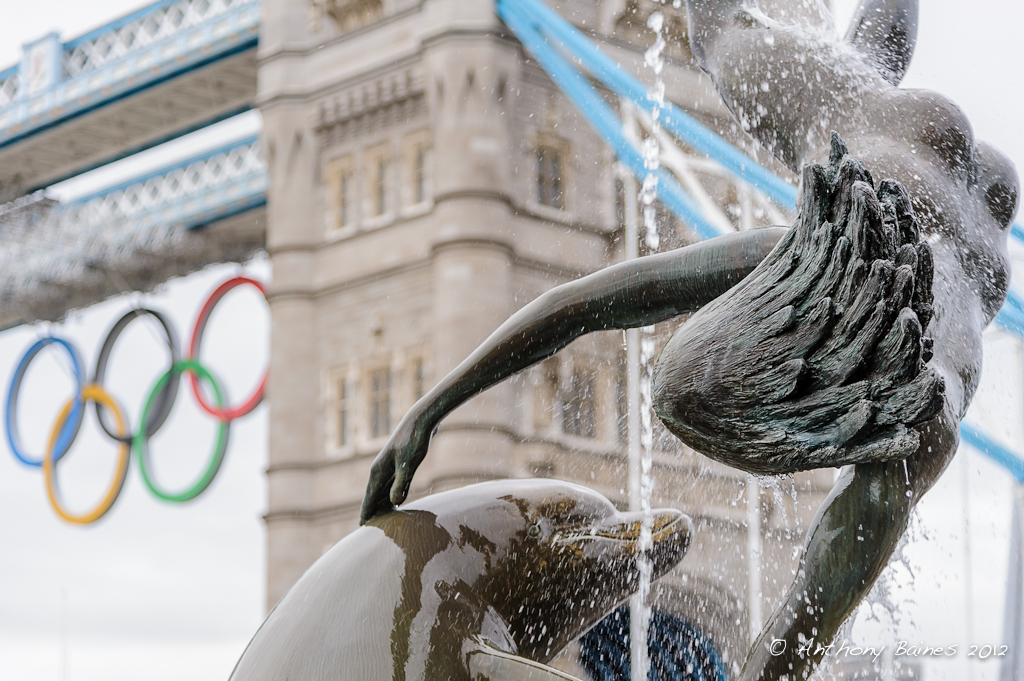
Dolphin and Girl, Tower Bridge
But, if you can cope with the size and weight, the lens is great for tourism.

In summary
Overall, my view is that this is a terrific lens. It is possible that one day I may supplement my gear with a small mirrorless camera, but I can't imagine ever replacing this lens with something else in my DSLR kit. You'll still find it in my cold dead hands.
Wednesday, 31 July 2013

The busy aviation week 2013

Frecce Tricilori singleton

It has taken some time, but this blog post is about that period in July that I look forward to every year: the consecutive weekends with the Flying Legends airshow at Duxford, followed by the Royal International Air Tattoo at Fairford.

I won't put very many pictures in this blog - there are just too many. But I've put sets on Flickr:

Flying Legends on Flickr

RIAT 2013 on Flickr

Mustang Heaven: Miss Velma, Princess Elizabeth and Nooky Booky wait before taking off to participate in the final Balbo at Duxford Flying Legends 2013. 8 overlapping images sticthed into a single panorama. Click for the original size image.
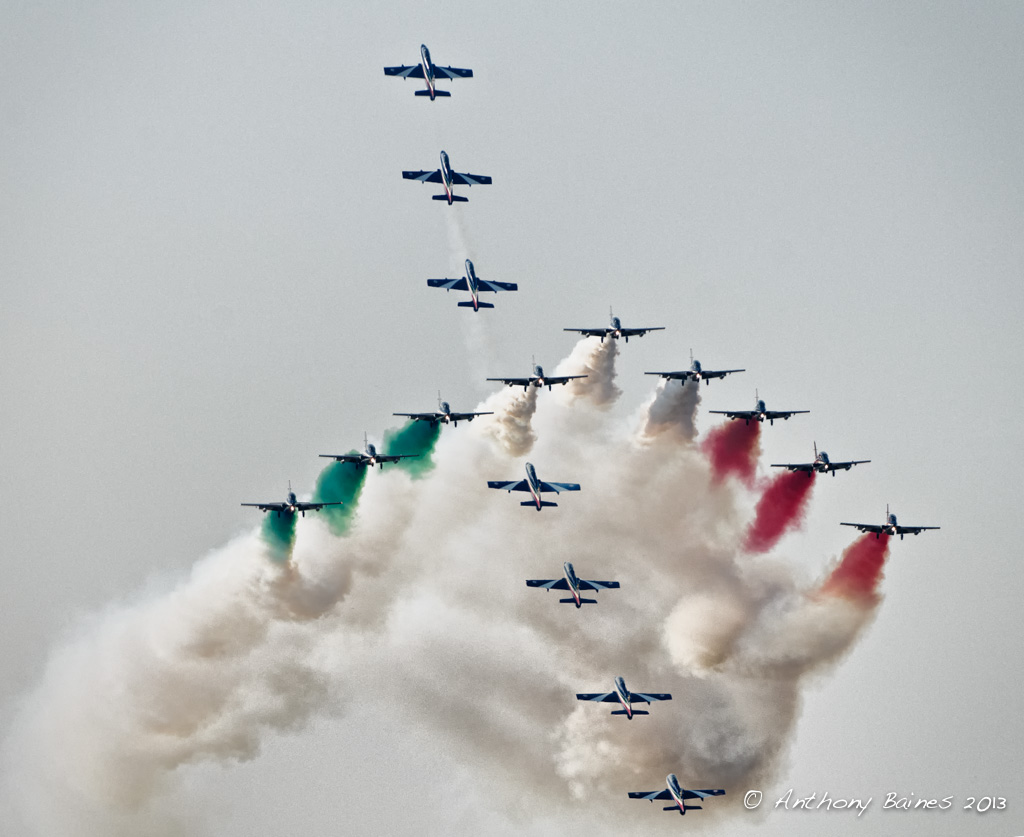
For my taste, some of the biggest draws have been the special imports, such as the P-51C Princess Elizabeth and P-51D Moonbeam McSwine, or the unique formations that have been flown specially, such as the new A380 or A400M with the Red Arrows. And on top of that was my favourite team display of all at Fairford, the Italian Frecce Tricolori.
Princess Elizabeth


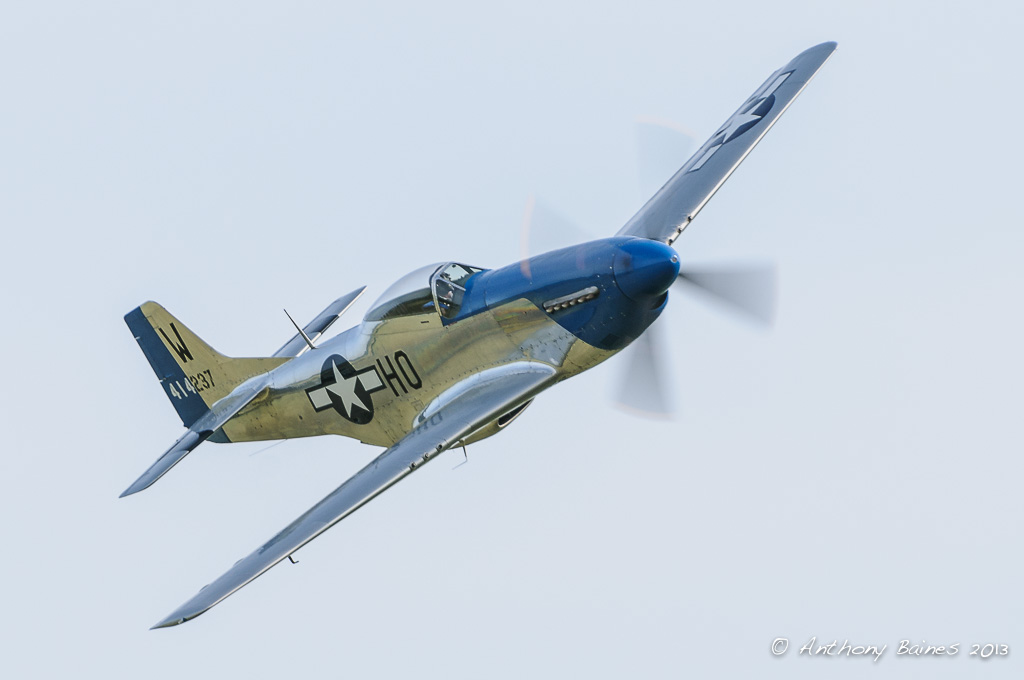
Moonbeam McSwine at Duxford Flying Legends

Fairford this year really showed the effects of the continuing economic difficulties throughout the world, with the consequent downsizing of air forces resulting in smaller numbers and less variety of aircraft than previously. The biggest reflection of this derives from the budget problems in the US which have led to the process of sequestration, meaning that no American aircraft from either the US Air Force or Navy have been made available this summer. In the past, we've had big ticket items from them such as B-52, B-1, F-117 or F-22 at Fairford, but not this year.  But a good turnout of fast jets at Fairford made up for that, for the most part.

The Red Arrows fly in formation with a British Airways A380

A400M in formation with the Reds
Polish Mig-29
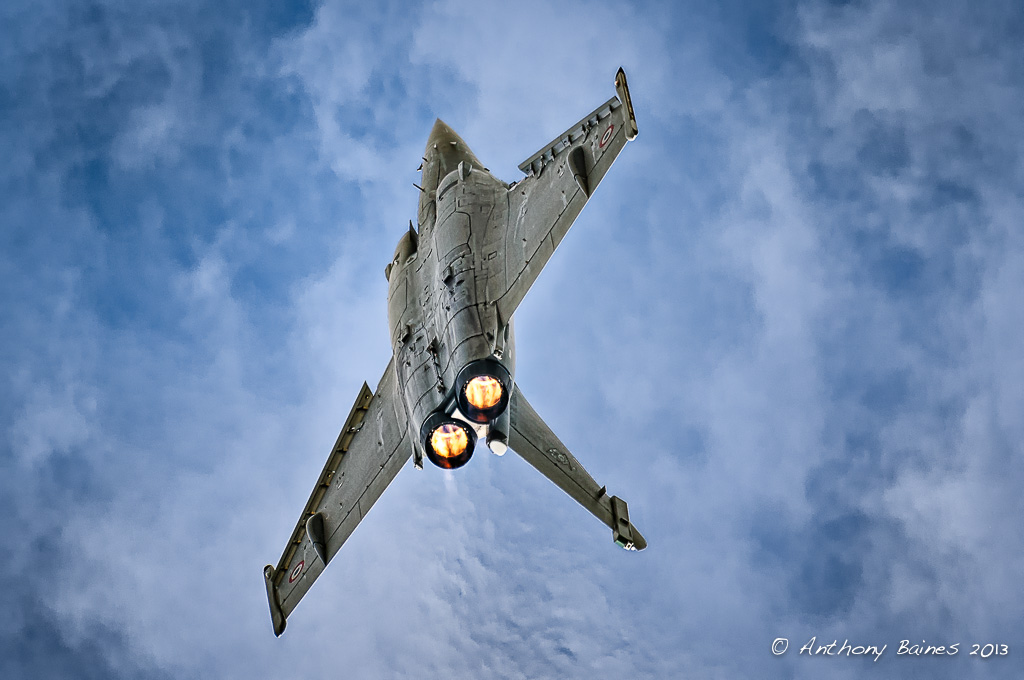
Rafale goes upstairs
Something I have always done - and I find it a growing interest - is to photograph not just the aircraft but the people at shows as well. It seems to me that there are two subjects at any airshow - the aircraft and the people - and if you put the two together, there are a lot of interesting possibilities.

For example, the Vulcan is a huge draw wherever it goes. While it taxied past during RIAT, people ran to the fence and waved or took pictures using anything that came to hand, including iPads.
The Vulcan and its fans
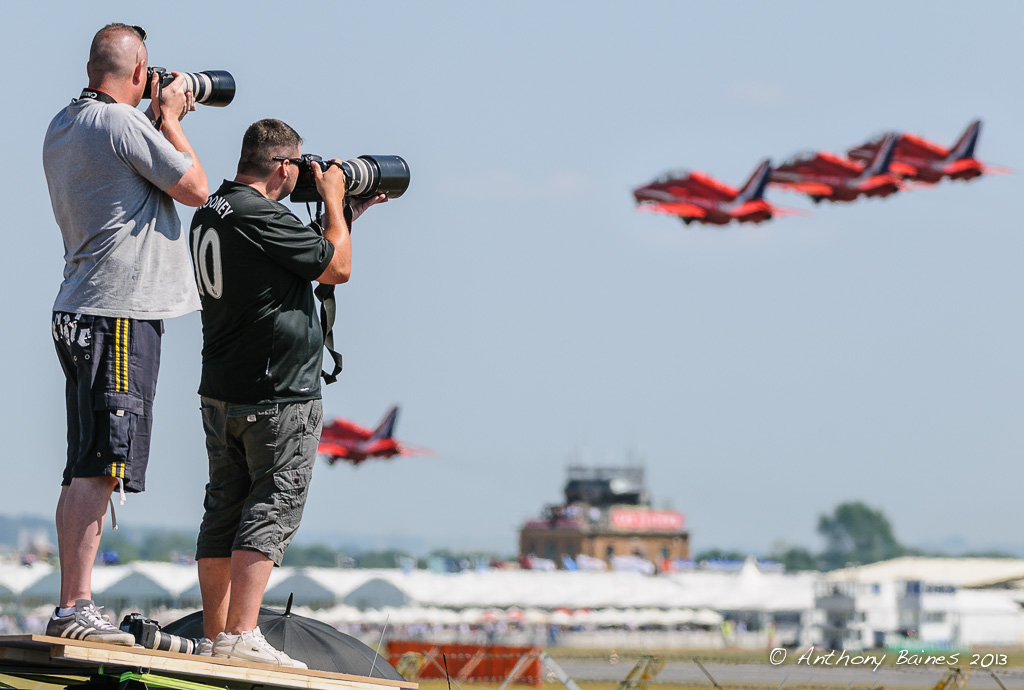
Serious photographers are always interesting as well. People will stand on anything to get a good view over a fence and grab pictures of aircraft taxiing or taking off.
Photographing the Reds on takeoff

On the other hand, you can't always retain interest. A big Airbus maybe impressive, but it does not always draw spectators attention.
Sometimes a drink is more important than an approaching aircraft

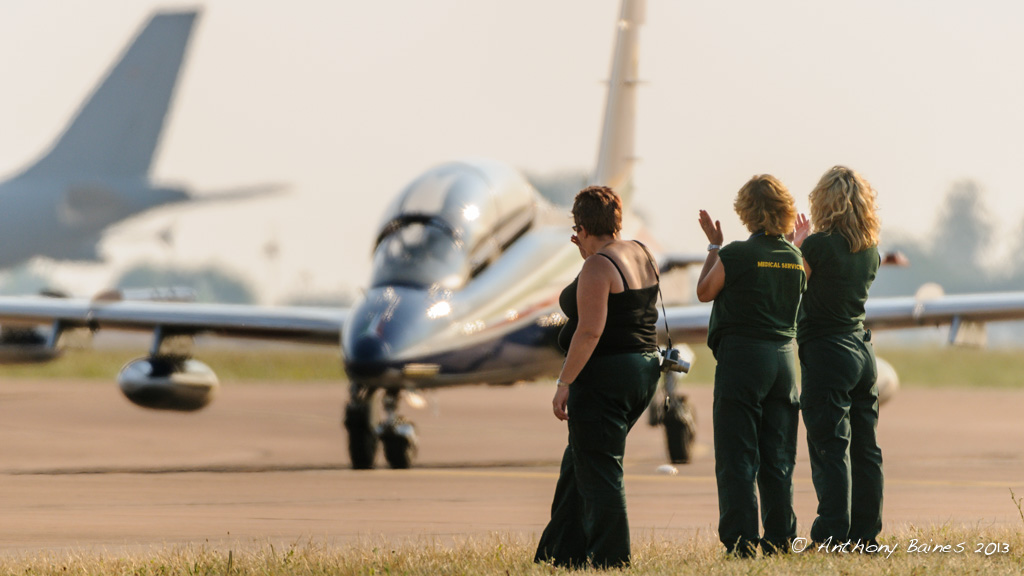
Finally, the Frecce are always hugely appreciated - even the paramedics standing by the taxiway applauded as they rolled in after their display, at least those who were not otherwise engaged with an ice cream.
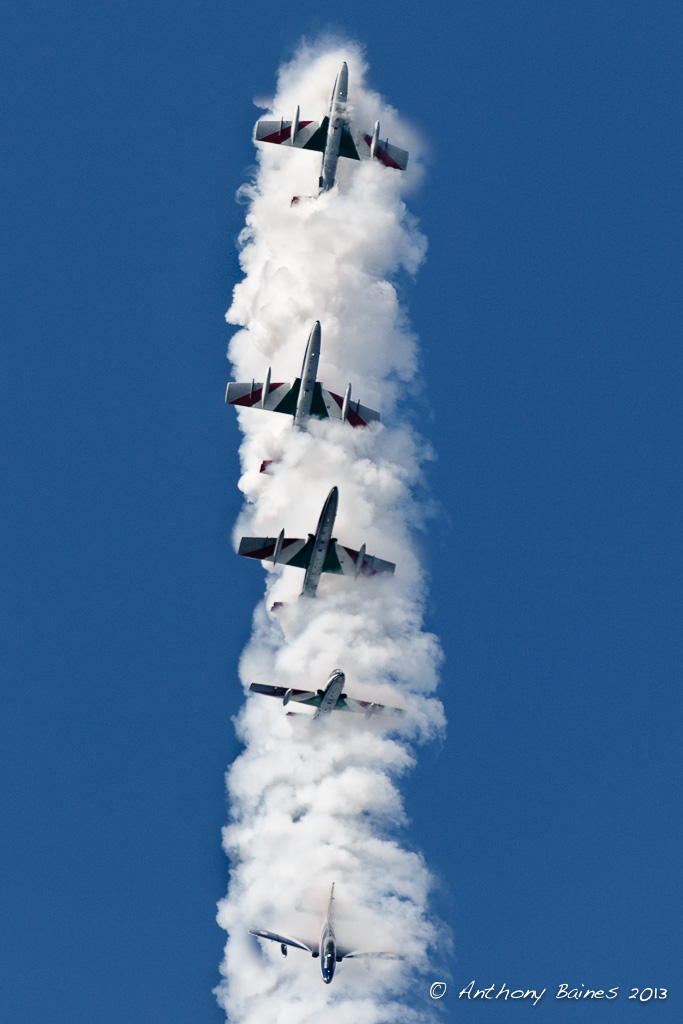
Frecce slide and flip: composite from a single burst of images

The Frecce singleton climbs past the main formation: composite from a single burst of images

Applauding the Frecce

Saturday, 22 June 2013

Orchids galore!

As we endure another poor spring and summer, one begins to wonder if the UK weather patterns will ever get back to normal. Even the boldest of scientists can't give a concise explanation and the jury is still out on 'global warming'. One thing that I can say for sure is that it has been a bumper year for orchids locally here in Kent. Of course, with extremes, there are always winners and losers: butterflies and migrant bird numbers are significantly down again this year.

It's all too easy to get down about such things but I'm going to resist this and enjoy the fact that this year has seen an abundance of orchids, following on from an excellent 2012.

Because of the cold, protracted spring, everything has been a little late this year - about 2-3 weeks I would say. Furthermore, from a photographic perspective, conditions have been far from ideal due to incessant strong northerly and easterly winds. Anyway, I'll stop bleating now and share some images with you.

Note: Unless otherwise stated all images were taken with a 100mm macro lens.

Old favourites


Lady orchid was the first species that I ever photographed and this south-eastern specialty has been prolific in 2013. On a recent trip to Denge Wood near Canterbury I can honestly say there were over 1,000 superb specimens in full bloom.

Lady orchid and common spotted orchids
Lady orchid, dominating in a sea of emerging common spotted

Lady orchid flower spike

There is a large natural variation in colouration even at a single site, with some very deeply coloured ones, like those above, to ones that are a much paler pink.

The light colour also dramatically alters the resultant image. The one below was taken in very 'warm' evening light giving a much different mood to the ones above that were taken a couple of hours before sunset, on an overcast day. A single shot with a 500mm lens, 1/100th at f/9 ISO 400; the distant hedge helping to give a naturally diffuse and dark background.


Lady orchid flower spike in late-evening light
I have taken to shooting with Daylight white balance now so that the subtle changes in light quality are captured, rather than 'normalised' by the camera when shooting in AWB. Of course, one can always tweak things in Lightroom afterwards.

It has been a record year for monkey orchid with over 500 recorded at a single site on the North Downs. They had not grown as tall as previous years though, and were barely above the level of the underlying grass which made them difficult to photograph.
Monkey orchid flower spike
Monkey orchid flower spike (focus stack from 6 images)

My favourite species has to be the greater butterfly orchid: These pale, tall and delicate flowers are very difficult to photograph as they are susceptible to the slightest puff of wind. There were hundreds of these in Denge Wood this year where other years' counts have been in the tens.

Greater butterfly orchid (and common spotted)

Greater butterfly orchid
One of the UK's most abundant species is the common spotted and most downland sites where one can find orchids will have a vast array of these flowering in early June.

The photograph below was taken about 2 hours before sunset, directly into the sun. This gives a nice bright, fresh appearance. I used a reflector to push some light back onto the flower and lifted the shadows a little in LR afterwards.

Common spotted orchid
Something new

One the most rewarding aspects of nature photography is finding something new and unexpected. Whilst I was walking around in Denge Wood I noticed a species of flower I had not seen before, dotted sparingly in the vegetation.

Lady, common spotted and common twayblade
Lady, common spotted and common twayblade...and something else!
It's not too obvious in the photograph above but there is a white flower on the left third. It turned out to be a white helleborine and I managed to track down an excellent specimen near the edge of the path.

White helleborine
So, those were a few highlights from the two recent evening trips I made. I'm hoping to find the time to track down a few more 'new-to-me' species over the next month or so, with man orchid at the top of the list. As much as I have enjoyed this year's 'orchid-fest' I'm hoping that next year brings us some more butterfly-friendly weather.

Earlier orchid posts on Wonky Horizons


Both Anthony and I have posted before on wild orchid photography:


Saturday, 8 June 2013

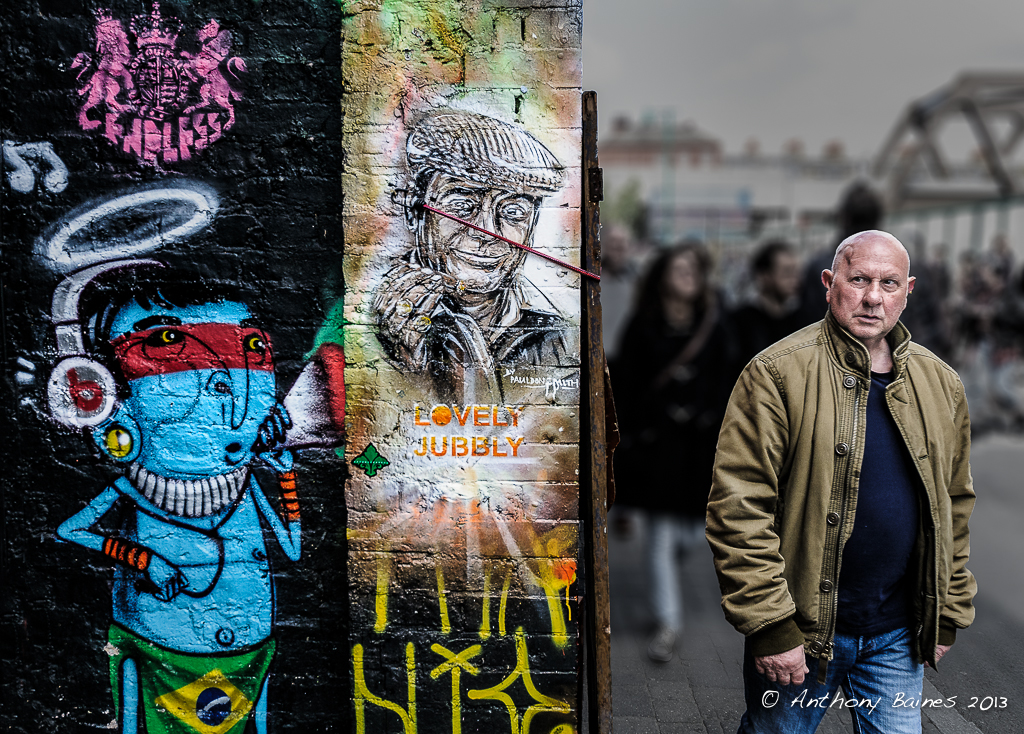
Lovely Jubbly

Lovely Jubbly

A few weeks ago, Wonky Horizons went for a day pottering in London. After viewing the Sony World Photography Awards Exhibition, we headed to Brick Lane for lunch in a Bangladeshi restaurant (extremely good, as expected). As usual, we headed off separately after that to wander some more, making pictures.

I liked some of the graffiti, as you can see in the picture above. (If 1980s UK cultural references pass you by, "Lovely Jubbly" was one of the catchphrases of "Del boy" Trotter in the BBC sitcom Only fools and horses).